

Views: 0 Author: Site Editor Publish Time: 2026-06-24 Origin: Site


The service life of PVC Pipe depends on more than the pipe material itself. Material grade, pressure class, installation quality, soil condition, temperature, sunlight exposure, chemical contact and maintenance all affect how long the system can perform. Under normal conditions, PVC piping is widely recognized for long-term service, especially in buried water, drainage, irrigation and cable protection systems. At andgsm, Hebei Anduan Technology Industry Co., Ltd. provides PVC piping products designed for corrosion resistance, stable performance and lower lifecycle cost in municipal, utility, agricultural and industrial projects.
PVC Pipe can provide long service life when it is selected correctly and installed under suitable conditions. Many project discussions describe PVC piping life in the range of several decades, and some underground systems can last even longer when pressure, temperature, soil load and installation quality are properly controlled.
The key point is that service life is not only a number printed in a product description. A pipe used in a stable buried water system will not age in the same way as a pipe exposed to direct sunlight or a pipe used under excessive pressure. The same material family can perform very differently depending on the actual working environment.
For this reason, andgsm focuses on matching the pipe category to the project condition. UPVC, CPVC, PVC-O, PVC-M and HPVC all belong to the wider PVC piping portfolio, but each one serves different requirements. A suitable pipe type, correct pressure rating and proper fitting system can help extend the working life of the whole pipeline.
Buried PVC Pipe systems often benefit from reduced sunlight exposure. Direct ultraviolet exposure can affect the pipe surface over time, while underground installation protects the pipe from constant sunlight and surface damage. This is one reason PVC is commonly used in water supply, drainage, irrigation and underground utility protection.
However, underground installation does not automatically guarantee long service life. Soil condition, trench depth, bedding, backfill quality, traffic load and joint installation all matter. A pipe buried in well-prepared soil with proper support will usually face less stress than a pipe placed in poor bedding or under heavy external load without protection.
For underground projects, andgsm can supply PVC pipes with suitable pressure classes, standard diameters, color coding, print markings and matching fittings. These details help the pipeline system remain organized and easier to identify during construction and maintenance.
The following table summarizes common factors that can affect PVC Pipe lifespan.
Condition | Expected Impact on Lifespan | What to Check |
Proper burial | Helps protect against sunlight and surface damage | Trench depth, bedding, backfill |
Constant UV exposure | May reduce surface performance over time | Outdoor protection, coating, covering |
High pressure | Requires correct pressure class | SDR, wall thickness, working pressure |
Chemical exposure | Depends on fluid compatibility | Medium type, temperature, concentration |
Poor installation | Can shorten service life | Joint quality, alignment, support |
Heavy external load | May cause deformation or stress | Soil compaction, traffic load, pipe stiffness |
Wrong pipe type | Can reduce system reliability | Application, pressure, temperature, environment |
Poor fitting match | May create leakage or weak points | Couplings, elbows, joints, sealing method |
This table shows that PVC Pipe durability comes from system matching, not only from the pipe wall. A strong pipe can still fail early if the fitting is wrong, the trench is poorly prepared or the pressure class does not match the operating condition.
For customers preparing an inquiry, it is useful to provide the application, size, pressure requirement, installation environment, soil or load condition, color requirements and fitting needs. With these details, andgsm can recommend a more suitable PVC piping system instead of only supplying a general pipe size.
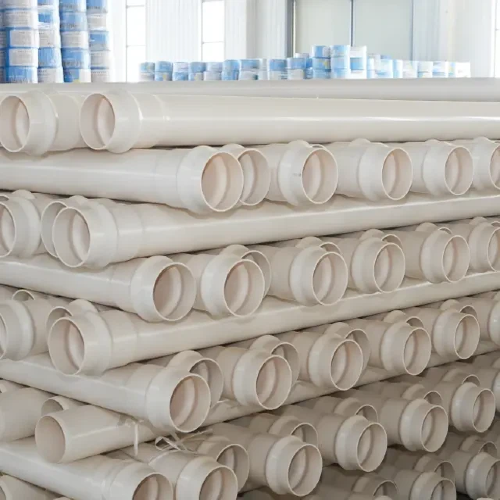
The correct pipe type is one of the most important factors in PVC Pipe service life. UPVC, CPVC, PVC-O, PVC-M and HPVC should not be treated as the same product. Each one is designed for different working conditions.
UPVC is a practical option for water supply, drainage, irrigation and conduit systems where corrosion resistance and cost control are important. CPVC is more suitable for conditions that require better heat and chemical resistance. PVC-O supports efficient water transmission with high strength-to-weight performance. PVC-M improves toughness and impact resistance for distribution networks. HPVC is designed for demanding power cable protection and utility corridor applications.
Choosing the wrong pipe type can reduce service life faster than normal material aging. For example, a pipe used in a higher temperature environment may require CPVC instead of a general PVC category. A demanding underground cable protection route may need HPVC instead of a basic conduit product.
Pressure class directly affects the durability of water supply and irrigation systems. If the pipe is used beyond its pressure rating for a long time, the system may face stress, leakage or reduced service life. Pressure fluctuation, pump operation, pipeline length and water hammer risk should also be considered.
A correct pressure class helps the pipe operate within its intended performance range. Wall thickness, SDR, working pressure and standard requirements should be reviewed together before ordering. A pipe selected only by diameter may not meet the actual pressure demand.
andgsm supports standard pressure classes and can recommend suitable PVC piping products according to working pressure and application. This is especially important for water transmission, irrigation mainlines and distribution networks.
Installation quality has a major influence on how long PVC Pipe can last. Even a high-quality pipe can be damaged by poor trench preparation, rough handling, bad alignment or incorrect jointing.
For buried systems, trench depth, bedding and backfill should support the pipe evenly. Sharp stones, uneven support or poor compaction can create stress points. For above-ground or exposed systems, support spacing, sunlight protection and mechanical protection should be considered.
Joint quality is also important. Leaks often appear at weak connection points rather than in the pipe body itself. Matching fittings, correct sealing and proper alignment help maintain system reliability. andgsm provides PVC pipes with matching pipe fittings, helping customers build a more complete and compatible system.
Corrosion resistance is one of the main reasons PVC Pipe is selected for long-term projects. Metal pipes may rust or weaken in wet soil, wastewater environments or certain chemical conditions. PVC does not rust like steel or iron, which helps reduce corrosion-related maintenance.
This advantage is useful in water supply, drainage, irrigation and underground cable protection. In buried systems, inspection and repair can be costly. A corrosion-resistant pipe material helps reduce the chance of early replacement caused by rust or material degradation.
For municipal and utility projects, lifecycle cost is often more important than initial pipe price alone. A pipe that reduces maintenance pressure can bring value over the full service period. andgsm PVC piping products are designed to support this kind of long-term project thinking.
PVC Pipe usually has smooth inner walls. This can help reduce flow resistance and support more stable operation in water supply, irrigation and drainage systems. In drainage applications, a smoother inner surface can help reduce unnecessary flow disturbance. In water systems, it can support efficient movement when the pipeline is correctly designed.
Smooth inner walls can also be useful in conduit applications. For power cable and telecom protection, a smooth internal surface helps reduce pulling friction during installation. This is especially valuable in long routes or utility corridors.
The result is not only easier installation. It can also reduce stress during cable pulling and help protect the system from avoidable damage. For HPVC Power Pipe and other conduit products, this practical detail supports long-term utility performance.
PVC Pipe should be inspected when visible cracking, deformation, leakage or pipe movement appears. These signs may suggest external impact, poor support, excessive pressure, installation stress or material mismatch.
A small surface mark may not always mean serious failure, but visible cracks or deformation should not be ignored. In buried systems, surface settlement or leakage may also indicate underground pipe movement or joint problems.
When damage is found, the system condition should be checked before replacement. The cause may come from pressure, external load, poor bedding, incorrect fitting installation or a change in operating conditions.
Pressure loss or flow reduction can also signal a problem. In water supply or irrigation systems, reduced pressure may come from leakage, blockage, pipe deformation, fitting failure or pump-related issues. In drainage systems, slow discharge may be connected to blockage, poor slope or insufficient internal capacity.
PVC Pipe itself may still be in good condition, but the system should be reviewed if performance changes suddenly. Checking pressure, flow, joints and visible pipe sections can help identify the source of the issue.
For project users, regular inspection is a practical way to protect long-term performance. This is especially important in systems that support municipal water, agricultural irrigation or critical utility routes.
A pipeline designed for one condition may not remain suitable if the system changes. Higher pressure, higher temperature, new chemical exposure, heavier ground load or additional cable installation can all affect pipe performance.
For example, a conduit originally designed for a certain cable load may need review if more cables are added later. A water pipeline may need reassessment if pump pressure increases. An industrial line may need another material direction if the transported medium changes.
When operating conditions change, andgsm can help review the application information and recommend whether the existing PVC Pipe direction remains suitable or whether another PVC-based product category should be considered.
PVC Pipe lifespan is not a fixed number because durability depends on material grade, pipe type, pressure class, installation quality, soil condition, sunlight exposure, chemical compatibility and maintenance. A correctly selected and properly installed PVC piping system can support long-term service while helping reduce corrosion-related lifecycle cost. Andgsm provides UPVC, CPVC, PVC-O, PVC-M and HPVC products with standard diameters, pressure classes, color coding, print markings and matching fittings for different project conditions. To discuss PVC-M Pipe or another durable PVC-based pipe system for your project, contact us with your specifications and our team will recommend a suitable solution with a rapid quotation.
PVC Pipe can last for several decades under suitable conditions. The actual lifespan depends on pipe type, pressure class, installation quality, sunlight exposure, soil condition and operating environment.
Buried PVC Pipe often lasts longer than constantly exposed pipe because it is protected from direct sunlight and surface damage. However, trench quality, soil load, backfill and joint installation still affect service life.
Wrong pipe selection, excessive pressure, poor installation, constant UV exposure, chemical incompatibility, heavy external load and poor fitting connection can all shorten PVC Pipe lifespan.
andgsm can recommend suitable PVC pipe types, pressure classes, fittings, color coding and markings according to your project conditions. Clear specifications help match the pipe system to the expected service environment.


