

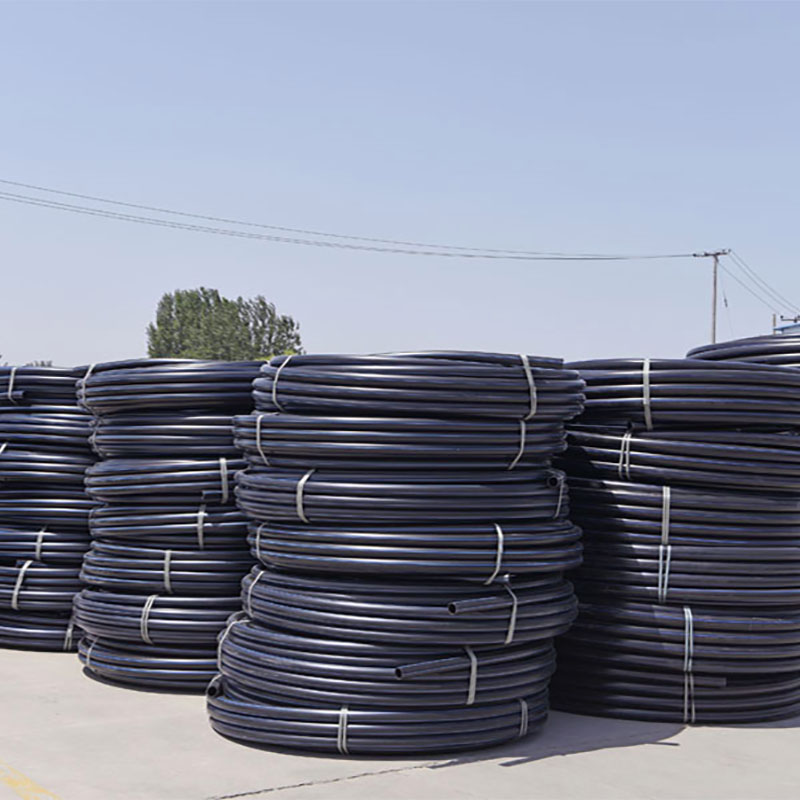


HDPE pipes have become the mainstream choice in modern agricultural irrigation systems and are rapidly replacing traditional concrete, steel and PVC pipes, thanks to their comprehensive outstanding performance.
| Quantity: | |
|---|---|


HDPE Irrigation Pipe is a high-performance piping solution tailored for agricultural irrigation systems, rapidly replacing traditional concrete, steel, and PVC pipes. Made from high-density polyethylene, it combines durability, efficiency, and versatility to meet the demands of modern farming. Its design addresses key irrigation challenges, such as water conservation, uniform distribution, and adaptability to diverse terrains, making it the preferred choice for farmers and irrigation engineers worldwide. Whether for large-scale farms or precision agriculture, this pipe delivers consistent, reliable water supply to crops.
| Parameter category | Parameter name | Unit | Typical values/descriptions | Importance |
| Material grade | Grade of raw materials | - | PE80, PE100 | PE100 is the preferred choice for modern irrigation systems, featuring higher pressure-bearing capacity and crack propagation resistance, allowing for the use of thinner pipe walls. |
| Pressure rating | Nominal pressure | MPa | PN0.4,PN0.6,PN0.8, PN1.0,PN1.25,PN1.6, etc | It refers to the maximum allowable working pressure of the pipe material at a water temperature of 20°C and must be selected based on the designed working pressure of the system. |
| Pressure rating | Nominal outer diameter | mm | 16, 20, 25, 32, 40, 50, 63, 75, 90, 110, 125, 140, 160, 180, 200, 225... Up to 2000+ | Standard size determines the flow capacity. |
| Standard size ratio | - | SDR41, SDR33, SDR26, SDR21,SDR17, SDR13.6, SDR11, SDR9 | The core parameter, SDR = nominal outer diameter/nominal wall thickness. The smaller the SDR value, the thicker the pipe wall and the higher the pressure-bearing capacity. | |
| Mechanical properties | Tensile yield strength | MPa | ≥ 22 (PE80) / ≥ 25 (PE100) | The basic strength indicators for materials to resist tensile failure. |
| Elongation at break | % | ≥ 350 | When measuring toughness, the higher the value, the better the flexibility and the less likely it is to suffer brittle failure. | |
| Thermal stability (OXIT) | min | ≥ 20 | Evaluating the anti-degradation ability of materials is related to their long-term lifespan. | |
| Long-term performance | Hydrostatic strength | - | Passed the tests at (20°C, 100 hours) and (80°C, 165 hours) | Key experiments for predicting the service life of pipes under long-term pressure and different temperatures (usually requiring more than 50 years). |
| Hydraulic performance | Roughness coefficient | - | Manning coefficient n ≈ 0.009 | The core advantage is the extremely low inner wall frictional resistance, which means that under the same flow rate, a smaller pipe diameter or a lower pump head can be selected, resulting in significant energy-saving effects. |
| Physical properties | Density | g/cm³ | 0.941-0.965 | It belongs to the category of high-density polyethylene. |
| Environmental adaptability | Operating temperature range | °C | -40°C to +60°C (General operating temperature: -20°C to 40°C) | Excellent low-temperature impact resistance, suitable for cold regions; Pressure reduction needs to be considered at high temperatures. |
As a flexible pipe, HDPE Irrigation Pipe can bend to a specific radius, easily bypassing obstacles like rocks, trees, or uneven land. This eliminates the need for excessive fittings and joints, reducing leak points and simplifying installation in complex terrains—from rolling hills to uneven fields.
Its lightweight design far outperforms metal and concrete pipes, making transportation, handling, and installation quick and labor-efficient. This reduces overall project costs, as fewer workers and less equipment are required, without sacrificing structural integrity.
The pipe offers excellent chemical resistance, withstanding corrosion from soil chemicals, fertilizers, and pesticides. It also boasts strong impact resistance and wear resistance, even at low temperatures, ensuring it survives harsh agricultural environments. Its smooth inner wall minimizes friction and clogs, even with water containing fine particles.
With a long service life, it provides a “once and for all” investment for farmers. Its leak-free connection system and high hydraulic efficiency maximize water flow, reduce waste, and lower energy costs—critical for sustainable irrigation practices. It also offers excellent UV resistance and hygiene performance, ensuring water quality and pipe durability.
Ideal for large-scale surface water diversion projects, it efficiently transports water from rivers, lakes, or reservoirs to farmlands. It’s also widely used in well irrigation systems, delivering groundwater to crops with minimal energy consumption.
Perfect for sprinkler irrigation and drip/micro-irrigation systems, the pipe ensures uniform water distribution—essential for precision agriculture. It adapts to the low-flow requirements of drip systems and the pressure demands of sprinkler setups, supporting optimal crop growth.
Available in premium material grades, the pipe’s design prioritizes pressure-bearing capacity and crack propagation resistance. Its nominal pressure ratings are tailored to match different irrigation system requirements, ensuring safe operation under varying water pressures.
With a wide range of nominal outer diameters, it accommodates diverse flow rates, from small-scale garden irrigation to large farm applications. The standard size ratio (SDR) design balances wall thickness and pressure capacity, optimizing both performance and material usage.
Engineered for low friction loss, its hydraulic design reduces pump energy requirements. The pipe’s operating temperature range adapts to extreme climates, from cold winters to hot summers, making it suitable for global agricultural use.
Yes, it has excellent chemical resistance, remaining unaffected by common agricultural fertilizers and pesticides, ensuring long-term durability and water quality.
Absolutely. Its strong low-temperature impact resistance allows it to perform reliably in freezing conditions without cracking or becoming brittle.
Its smooth inner wall reduces water friction, improving flow efficiency, while leak-free connections minimize waste. Lower friction also means pumps require less energy to maintain water pressure, cutting energy costs significantly.


