
Views: 0 Author: Site Editor Publish Time: 2026-05-22 Origin: Site


Yes, PVC can replace ABS pipe in many drain, waste, and vent repairs, but the safe answer depends on what you are replacing and how the two materials meet. Swapping a full run is usually a different job from tying a new white PVC section into an old black drain line. The joint is where leaks, failed inspections, and expensive rework usually start.
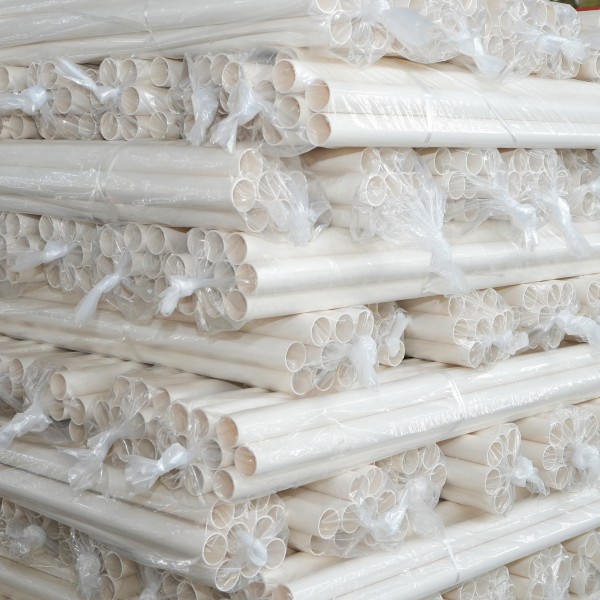
Replacing an entire damaged run with Schedule 40 PVC is usually simpler than mixing materials in one short repair. If the old section can be removed back to a clean, accessible connection point, you can often rebuild that run with PVC fittings, PVC primer, and PVC solvent cement. This keeps the system consistent and reduces the number of transition joints.
Mixing materials is different. When a PVC pipe must connect to an existing ABS pipe, the question changes from “Is PVC a good drain material?” to “How do I make this transition without a weak joint?” Standard ABS cement is formulated for ABS, while PVC cement and primer are designed for PVC. Treating them as interchangeable is the shortcut that causes trouble.
PVC often makes sense for indoor bathroom, kitchen, laundry, and utility-room drain repairs. It is widely available, easy to identify, and supported by a large range of elbows, tees, wyes, trap adapters, and cleanout fittings. For many remodels, the local supply shelf will have more PVC DWV options than ABS pipe fittings.
Noise is another reason homeowners choose PVC. Running water can sound harsh inside walls, especially near bedrooms or finished basements. PVC is not silent, but it generally dampens drain noise better than ABS in many residential applications. For an indoor DWV system where code allows PVC, that practical comfort factor matters.
Keeping ABS pipe may be smarter when the existing system is already ABS and only a short section is damaged. Matching the material avoids unnecessary ABS-to-PVC transition points, which can simplify the repair and reduce inspection questions. A like-for-like repair also lets you use ABS solvent cement on ABS fittings rather than introducing a mixed-material joint.
ABS pipe is also valued in some underground, cold-area, RV, and mobile-home contexts because of its rigidity and impact resistance. Vibration, soil movement, and cold-weather handling can change the best choice. Availability still matters, though: in some regions, PVC is easier to source, while in others, black ABS drain pipe is common.
Repair Scenario | Better Direction | Why It Makes Sense | Watch Out For |
Indoor DWV repair | Often PVC | Quiet, available, easy to source | Must be code-approved locally |
Short ABS pipe repair | Often ABS | Fewer transition joints | Need matching fittings and cement |
Underground drain | Depends on code and soil | ABS or PVC may work | Bedding, slope, and support matter |
RV or mobile home | Often match existing ABS | Less transition complexity | Vibration can stress joints |
Exposed outdoor run | Usually avoid bare ABS pipe | UV exposure can weaken plastics | Protect or reroute when possible |
Hidden wall repair | Use the most defensible method | Hard to access later | Inspection and leak risk are higher |
A shielded transition coupling is usually the safest choice when PVC has to meet ABS pipe. This fitting uses a rubber sleeve to seal around both pipe ends and a stainless steel band to control alignment and shear movement. Unlike solvent cement, it does not rely on chemically melting two different plastics into one bond.
A no-hub style coupling or listed plastic-to-plastic transition fitting should be selected for the specific pipe materials and sizes. The clamps should be tightened evenly, ideally with a torque wrench, because loose bands can leak and overtightened bands can distort the pipe. Support on both sides of the joint matters as much as the coupling itself, especially on horizontal drain lines.
Green ABS-to-PVC transition cement exists, but it should not be treated as a universal glue. Its intended use is narrow: specific non-pressure DWV transition joints where the product, application, and local plumbing code allow it. It is not a replacement for ABS cement on ABS-to-ABS joints or PVC cement on PVC-to-PVC joints.
Primer rules can also confuse DIY repairs. PVC commonly requires primer before cement, while ABS pipe joints typically use a one-step ABS solvent cement process. When the two materials meet, the product label and local code decide the method, not the color of the pipe or the installer’s preference. If the repair will be inspected, a listed shielded coupling is usually easier to defend.
A joint behind drywall, under a slab, or below grade deserves a more conservative decision. A connection that “feels strong” in your hands is not the same as a code-compliant transition. Once the wall is closed or the trench is backfilled, even a small drip can become a mold, odor, or structural repair problem.
For hidden work, prioritize listed fittings, proper pipe support, clean cuts, and access where possible. If your local code does not allow transition cement for that location, using it may create a problem during resale, inspection, or insurance review. The best repair is the one that still looks correct when another plumber opens the wall years later.
Pro Tip: Fastest is not always safest. If the joint will be hidden, buried, or inspected, use a listed shielded transition coupling unless your local plumbing authority clearly allows another method. A few extra minutes spent on the ABS pipe transition can prevent a second repair.
ABS pipe is often described as quicker to install because many ABS joints use a one-step cement process. PVC usually requires purple primer followed by PVC solvent cement, which adds a step but also creates a visible sign that the pipe was prepared. The difference sounds small until you are working in a tight cabinet, crawlspace, or ceiling cavity.
Most installation failures are not caused by the pipe material alone. Crooked cuts, dirty surfaces, shallow insertion, skipped primer, rushed assembly, or movement before cure time can all weaken a joint. Dry-fitting is useful, but every fitting should be marked for alignment before cement is applied, because solvent-welded joints set quickly.
ABS pipe is commonly chosen for toughness and impact resistance. PVC is slightly more flexible and is often preferred indoors where drain noise matters. Neither should be used as a casual substitute for pressure-rated water piping unless the product is specifically rated and approved for that application.
Temperature and system type matter more than many buyers expect. Standard DWV materials are designed for non-pressure drainage, not hot-water supply lines. A laundry, dishwasher, or mechanical discharge line may expose the system to warmer water than a simple sink drain, so the material marking and code requirements should be checked before the repair.
Exposed sunlight is a weak point for ABS pipe. Long UV exposure can discolor the surface and reduce impact resistance over time, especially when pipe is stored outdoors or installed where the sun hits it directly. A faded surface does not always mean immediate failure, but brittleness, cracking, or chalky texture should be taken seriously.
PVC generally handles outdoor exposure better than ABS, but “better” does not mean every outdoor installation is automatically correct. Local code, pipe rating, support, expansion, and physical protection still apply. For exposed exterior drain runs, plan the route and shielding before choosing the material.
Factor | ABS | PVC | Repair Takeaway |
Installation | Often one-step cement | Primer plus cement | PVC takes more prep |
Noise | Louder in many walls | Often quieter | PVC may suit finished spaces |
Impact resistance | Strong reputation | Good but different feel | ABS may suit rougher handling |
Outdoor sunlight | More vulnerable | Usually more tolerant | Avoid exposed ABS pipe |
Mixed-material joints | Needs transition method | Needs transition method | Do not use regular cement across both |
Best repair use | Matching existing ABS pipe | Full indoor replacement | Decide by location and code |
The most common mistake is grabbing whichever can of cement is nearby. ABS cement, PVC cement, and transition cement are not the same product. Each relies on solvent welding, but the solvents and resin systems are designed around specific plastics and use cases.
A poor joint may hold during a quick water test and still fail later when the pipe moves, warms, cools, or carries a heavy discharge. That is why mixed-material repairs should be planned before the first cut. If you cannot verify that the cement is approved for the exact transition, use a listed mechanical coupling instead.
Flexible rubber couplings are convenient, but not every rubber sleeve is right for every location. An unshielded coupling may allow too much movement on a horizontal drain line or inside a wall cavity. A shielded transition coupling adds a stainless steel band that helps keep the pipes aligned under load.
Pipe alignment should be straight, supported, and free from tension before the bands are tightened. If the coupling is being used to pull misaligned pipes together, the joint is already under stress. That stress can show up later as a drip, odor, or cracked fitting.
A material swap will not fix a badly pitched drain. Horizontal DWV lines need consistent slope so waste and water move together rather than leaving solids behind. A sagging section, often called a pipe belly, can cause slow drainage, clogs, and repeated service calls.
Support spacing, hanger placement, and access are part of the repair. A cleanout near the right location can save hours during future maintenance. Vibration from appliances, mobile homes, or nearby mechanical equipment can also stress the transition point, so do not leave the new joint hanging between two unsupported pipe sections.
Replacing ABS with PVC can be practical for many DWV repairs, but the key is choosing the right connection method, not just the pipe material. A full PVC replacement is often straightforward, while any ABS pipe-to-PVC transition should be handled with code-approved fittings, proper support, and attention to long-term leak risk. Hebei Anduan Technology Industry Co., Ltd. supports projects with reliable pipe-related products and practical material guidance, helping buyers and contractors choose components that improve installation efficiency, reduce repair uncertainty, and keep drainage systems easier to maintain.
A: Yes, PVC can replace ABS pipe in many DWV repairs, but the connection method matters. For mixed-material joints, use code-approved transition fittings, not regular pipe cement.
A: Standard ABS cement or PVC cement should not be used as a universal glue. Many codes restrict glued ABS-to-PVC joints, so check local rules first.
A: A shielded mechanical coupling is usually the safest option. It uses a rubber sleeve and metal band to connect the two pipes without chemical bonding.
A: It depends on the location. ABS is often used underground or in colder areas, while PVC is common indoors because it is widely available and quieter.
A: Green transition cement may be allowed for certain non-pressure DWV transitions, but it is not suitable for every repair. Always confirm product instructions and local plumbing code.
A: If matching ABS fittings are available, replacing the damaged section with ABS often avoids an extra transition joint. PVC may be practical when doing a larger replacement.


