
Views: 0 Author: Site Editor Publish Time: 2026-05-12 Origin: Site


ABS pipe is mainly used for drain, waste, and vent work, not pressurized water supply. In a typical home project, that means sink drains, shower drains, toilet branches, vent stacks, laundry drains, and other non-pressure DWV connections.
First confirm the route and slope, then dry-fit the fittings, cut the pipe square, deburr the edges, apply ABS solvent cement, push and quarter-turn the joint, allow enough cure time, and test before closing the wall or trench. Most installation failures come from rushed layout work, not from the plastic itself. A neat-looking joint can still fail if the pipe is angled, wet, under stress, or sloped the wrong way.
A drain line is not successful because it reaches the wall; it is successful because gravity can keep waste moving. For many horizontal drain runs, plumbers commonly use 1/4 inch of fall per foot as a practical pitch target, but local code and fixture type should always guide the final layout. Too little slope leaves standing water, while poor fitting choice can slow the line even when the pipe looks properly angled.
Before cutting ABS pipe, map the route from the fixture to the branch or main drain. Leave room for the trap, trap arm, cleanout access, and any venting requirement. A shower drain, kitchen sink, and washing machine standpipe do not behave the same way, so avoid copying a layout from another fixture without checking its purpose.
The best layout also avoids strain. Do not bend a fitting into position or force a pipe to meet a hub that is slightly off-line. Solvent-welded joints are strongest when the pipe enters the socket straight, fully seated, and without side pressure.
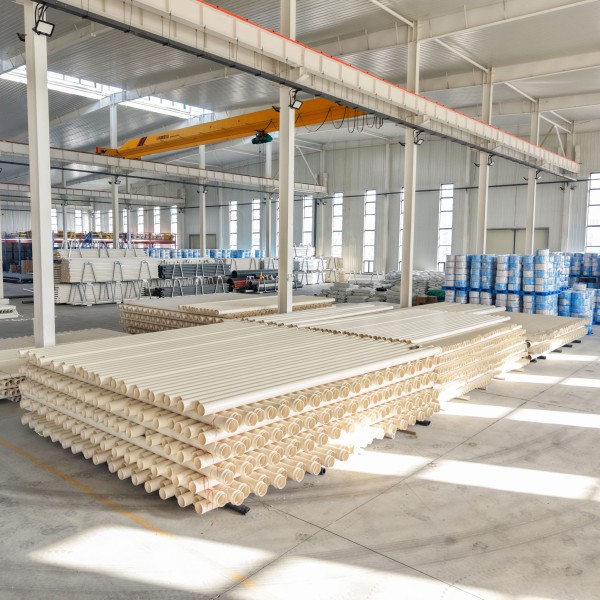
ABS solvent cement sets quickly, so the thinking must happen before the cement can is opened. Dry-fit the elbows, couplings, sanitary tees, wyes, trap adapters, and cleanouts in the same order they will be assembled. Then draw alignment marks across the fitting and pipe so the final quarter-turn ends exactly where the fitting needs to face.
Socket depth is easy to overlook. A pipe that is only partly inserted may look connected, but the bond area inside the fitting hub will be too short. Push each dry piece to the proper depth, mark the insertion line, and confirm that the assembly still maintains slope after all fittings are in place.
This step is especially useful when installing ABS pipe in a cabinet, crawlspace, or narrow wall cavity. Tight spaces make it harder to rotate a fitting after insertion, and the cemented joint will not wait while you decide which way a tee should point.
A clean installation does not require many tools, but the right ones change the result. Use matching ABS fittings, black ABS solvent cement, a pipe cutter or fine-tooth saw, deburring tool, tape measure, marker, clean rag, gloves, and ventilation. ASTM D2235 covers solvent cement for joining ABS plastic pipe and fittings, and the standard notes that satisfactory joining cannot be made when water is present because moisture harms the cement bond.
Avoid treating cement as ordinary glue. It softens the plastic surfaces so they chemically fuse, which is why dirty, wet, oily, or poorly fitted parts cause weak joints. Old cement that has thickened, gelled, or become stringy should not be trusted on a drain line that will be hidden behind a wall.
Pre-glue checklist:
● Correct pipe size and fitting type confirmed
● Schedule 40 ABS or approved DWV material verified
● Slope measured before cementing
● Dry-fit completed in final order
● Alignment and insertion marks drawn
● ABS solvent cement checked for condition and compatibility
● Work area ventilated and free of water, dust, and grease
Measure twice, but also measure with the fitting hub in mind. The visible gap between two fittings is not always the same as the cut length because each pipe end disappears into a socket. Mark the cut line clearly, then use a tubing cutter, miter saw, or fine-tooth handsaw to keep the end square.
An angled cut reduces contact inside the hub. One side bottoms out early while the other side leaves a shallow bonding area, creating a joint that can seep or pull out under stress. If an existing ABS pipe end is cracked, gouged, sun-brittled, or out of round, cut back to solid material rather than trying to save an extra inch.
After cutting, wipe the surface before test fitting. Saw dust and plastic fragments can prevent full insertion, especially on smaller drain sizes where the socket tolerance is less forgiving. A straight, clean end is the foundation for every step that follows.
The outside edge affects the joint, but the inside edge affects long-term drainage. Burrs inside an ABS pipe can snag hair, lint, soap residue, food particles, and grease. A tiny ridge at a sink or shower connection can become the first point where debris gathers.
Use a deburring tool, utility knife, half-round file, or chamfering tool to smooth both the inner and outer edges. A light bevel helps the pipe enter the fitting without scraping away too much cement. Do not grind aggressively; the goal is a clean edge, not a smaller pipe.
Cleaning matters as much as cutting. Wipe the pipe end and fitting socket with a dry rag so dust, oil, and moisture do not sit between the two softened plastic surfaces. For a hidden drain repair, this small preparation step often separates a permanent fix from a callback leak.
Once the parts are dry and aligned, apply cement with purpose. Coat the outside of the pipe end to the insertion depth, then coat the inside of the fitting socket evenly without leaving heavy puddles. Oatey describes its medium-bodied black ABS cement as a fast-set product for non-pressure ABS applications, usable on ABS pipe and fittings up to 6 inches in diameter with interference fit, with a recommended application temperature range of 40°F to 110°F.
Immediately push the pipe into the fitting until it bottoms out. Rotate it about a quarter-turn as it enters so the cement spreads across the mating surfaces. Stop turning once the pipe is fully seated, line up the marks, and hold the joint long enough to prevent push-out.
A proper joint normally shows a continuous cement bead around the rim. Gaps in the bead suggest uneven cement coverage or incomplete insertion. Wipe away excess cement on the outside, but do not disturb the joint while the softened plastic begins to set.
Pro-Tip: Make one long alignment mark across the pipe and fitting during dry-fit. Start the cemented insertion slightly off that line, then finish the quarter-turn with the marks aligned.
Installation detail | Why it matters | Common mistake |
Square cut | Gives even hub contact | Cutting at an angle |
Deburred edge | Reduces clog points and scraping | Leaving inner shavings |
Dry socket | Allows chemical fusion | Cementing wet pipe |
Quarter-turn | Spreads cement evenly | Pushing straight without rotation |
Hold time | Prevents push-out | Letting go immediately |
Set time and cure time are not the same. Set time is when the joint can usually be handled carefully; cure time is when it is ready for service conditions. Oatey’s 2026 solvent-welding guidance says cure time varies with humidity, material, pipe size, temperature, and airflow, so the cement label or cure chart should override a casual rule of thumb.
A small lavatory drain in a warm, dry room may be ready sooner than a larger pipe installed in a cold crawlspace. Damp conditions can slow the process, and oversized fittings or loose socket fit can also affect the bond. Rushing water through a joint that has not cured can turn a good installation into a slow leak.
When in doubt, wait longer. Closing drywall, backfilling a trench, or installing a cabinet panel before testing creates more work if a joint weeps later.
Start with a visual inspection. Look for a continuous cement bead, aligned fittings, unsupported spans, low spots, and pipe sections that appear twisted under tension. Run water gradually, then increase flow while watching every joint with a flashlight.
A water test gives more useful feedback than air for most small drain checks because water shows where the leak is. Charlotte Pipe warns that air testing PVC, CPVC, and ABS plastic piping can create injury or property-damage risk and is less accurate than water for finding leaks.
Also check flow behavior. If water drains slowly, listen for gurgling, look for standing water in horizontal runs, and recheck slope. A leak-free ABS pipe installation can still perform poorly if the drain route traps water or lacks proper venting.
Older drain lines deserve a wider inspection than the visible leak. ABS pipe can crack at a fitting, but the stress may come from a sagging run, unsupported section, or previous repair that pulled the line out of alignment. Cutting out only the wet spot may not solve the underlying problem.
Remove enough damaged pipe to reach clean, round, stable material. Use compatible couplings and confirm that the repaired run keeps the same slope as the original design. A repair section should not become a rigid bridge that forces old fittings to carry tension.
When several nearby joints look dull, cracked, or distorted, replacement of a longer section may be more reliable than stacking short repairs. The best repair is one that restores alignment, support, and flow—not just one that stops today’s drip.
Mixed-material work is where many DIY drain repairs go wrong. Standard ABS cement is made for ABS-to-ABS joints, and ordinary PVC cement is not the safe default for ABS-to-PVC transitions. Use an approved transition cement only where allowed, or choose a listed mechanical transition coupling or shielded coupling that matches the pipe sizes and local code.
Code acceptance varies by jurisdiction, especially when a transition is hidden inside a wall or buried. A plumber or inspector may require a specific coupling style rather than a solvent-welded transition. That extra check is cheaper than opening the wall after inspection fails.
Underground installation adds load, soil movement, and backfill quality to the equation. Bed the pipe so it is supported along the run rather than resting on a few high points. Sharp rock, construction debris, or uneven compaction can create pressure points that lead to future damage.
Sun exposure is another concern. Some ABS products are made for DWV use only and may have temperature or exposure limits; Charlotte Pipe, for example, describes its ABS Plus cellular-core product as non-pressure DWV material where temperatures will not exceed 140°F. Exposed vent stacks or outdoor runs should follow manufacturer guidance and local code before being left uncovered.
Installing an ABS pipe drain line well comes down to careful layout, square cuts, clean edges, proper dry-fitting, and correct use of ABS solvent cement. Good slope, full socket insertion, enough cure time, and basic water testing help prevent leaks, weak joints, and slow drainage after the wall or trench is closed.
For projects that require dependable drainage materials, Hebei Anduan Technology Industry Co., Ltd. provides pipe-related products and practical support that can help contractors and buyers choose suitable materials, reduce installation errors, and improve long-term system reliability.
A: No. ABS pipe is normally joined with ABS solvent cement only. Primer is used for PVC or CPVC, not standard ABS drain pipe joints.
A: Cure time depends on pipe size, temperature, humidity, and airflow. Always follow the cement label, especially before testing or covering the drain line.
A: Many horizontal drain runs use about 1/4 inch of fall per foot, but fixture type and local plumbing code should guide the final slope.
A: Yes, but only with an approved ABS-to-PVC transition cement or mechanical transition coupling where local code allows. Do not use ordinary cement by default.
A: Common causes include uneven cement coverage, wet or dirty surfaces, shallow insertion, angled cuts, poor dry-fitting, or letting the joint push out before it sets.


