
Views: 0 Author: Site Editor Publish Time: 2026-05-14 Origin: Site


ABS pipe size is usually sold by nominal pipe size, but the measurement that helps you buy the correct fitting is the outside diameter. A pipe labeled 2 inches will not measure exactly 2 inches across, which is why many DIY repairs go wrong in the store aisle rather than under the sink.
Before cutting anything, look for markings on the pipe body. If the label is faded, painted, or hidden behind framing, use one of the measuring methods below and compare the result with a standard ABS pipe size chart.
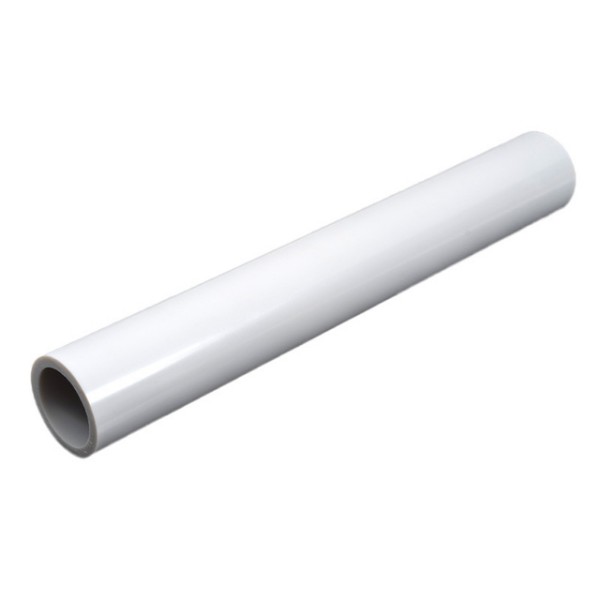
A caliper gives the cleanest reading because it measures directly across the outside diameter, often called OD. Place the jaws around the widest part of the ABS pipe and keep the tool square to the pipe wall. If the caliper is tilted, the reading can look slightly larger than the real dimension. This method works best when the pipe is exposed, when you have a short replacement piece in your hand, or when you need to match a coupling with minimal trial and error. For example, a measured OD near 1.900 inches usually points to a nominal 1-1/2 inch ABS pipe, while an OD near 2.375 inches usually points to a nominal 2 inch pipe.
Check more than one spot if the pipe is old, crushed, or slightly oval. Drain lines can deform from poor support, heat exposure, or previous repair work, and a single reading may not represent the original size. The most useful number is the measurement that matches a recognized standard ABS pipe size, not the most random number your tool displays.
A tape measure is fast when the pipe has an open end. Hold the tape straight across the cut face from one outside edge to the opposite outside edge. Do not measure only the hollow opening, because inside diameter changes with wall thickness and does not tell you which fitting will slide over the pipe. This method is practical for sink drains, shower drains, short wall stubs, and replacement sections where a caliper is not available. A clean, square cut makes the reading easier, while a ragged cut can make the diameter look inconsistent. If the ABS pipe end is dirty, wipe the edge before measuring so old cement, burrs, or grime do not add false thickness. Tape readings are rarely perfect, so round to the nearest standard size. A reading slightly above or below a known OD is usually a measurement error, not a special pipe size. Bring your measurement and a photo of the pipe marking to the store if you are unsure.
Installed drain lines often run close to a wall, under a cabinet, or behind another fixture, making the pipe end impossible to reach. In that case, wrap a flexible tape, strip of paper, or string around the pipe and mark where it overlaps. Measure that length flat, then divide by 3.1416 to estimate the outside diameter. For example, a circumference of about 7.46 inches points to an OD close to 2.375 inches, which usually matches a nominal 2 inch pipe. This method is less precise than a caliper, but it is extremely useful when the pipe is still installed and you only need to choose the likely fitting size. When the result falls between two sizes, measure again before buying an ABS pipe fitting.
Pro Tip: Do not measure the inside opening only. ABS fittings usually connect to the outside diameter, so ID alone can lead to a fitting that looks right on paper but fails during dry fitting.
Once you have the OD, compare it with a standard ABS pipe size chart. Residential drain-waste-vent systems commonly use nominal sizes such as 1-1/4 inch, 1-1/2 inch, 2 inch, 3 inch, and 4 inch. The number printed on the pipe is the trade size, while the actual outside diameter is larger.
Nominal Size | Approx. Actual OD | Approx. Circumference | Common Use |
1-1/4 in. | 1.660 in. | 5.21 in. | Small lavatory drains |
1-1/2 in. | 1.900 in. | 5.97 in. | Kitchen sinks, tubs, vanity drains |
2 in. | 2.375 in. | 7.46 in. | Showers, laundry standpipes, larger drains |
3 in. | 3.500 in. | 11.00 in. | Toilets, soil stacks |
4 in. | 4.500 in. | 14.14 in. | Main building drains, sewer connections |
Small field differences are normal. A worn tape, a slightly angled reading, or an uneven cut can shift the number, but the final choice should land on a standard nominal pipe size. This is the key step in how to measure ABS pipe size correctly: measure the OD, then translate it into the size used by fittings.
The fixture connected to the pipe can confirm whether your measurement makes sense. A bathroom sink usually does not need the same drain size as a toilet, and a washing machine standpipe should not be treated like a tiny lavatory drain. When the measured ABS pipe size and the fixture type disagree, pause before buying parts.
A 1-1/2 inch pipe is common around kitchen sinks, tubs, and many vanity drains. A 2 inch line is more likely around showers, laundry drains, and larger branch drains. Toilets and main soil stacks often move into 3 inch or 4 inch territory, depending on the layout and local code.
Fixture context should not replace measurement, but it can catch obvious mistakes. If a pipe under a sink appears to measure like a main drain, you may be measuring a fitting hub instead of the pipe barrel. If a toilet branch seems too small, check whether you measured a vent line or another nearby drain.
Buying the right nominal size is only part of the job. The fitting also needs to be the right material, shape, and socket style for the repair. ABS couplings, elbows, tees, wyes, trap adapters, and cleanouts may all share a size label, but they solve different layout problems.
Dry-fit the pipe and fitting before using solvent cement. The pipe should enter the fitting socket to the expected depth and align without forcing the drain line out of position. If the connection bottoms out too early, feels sloppy, or twists into a strained position, the size or fitting type may be wrong.
Also check the material label. PVC and CPVC parts can look close in size, but they are not automatically interchangeable with ABS pipe. The wrong cement or an unapproved mixed-material joint can create a weak connection even when the diameter looks correct.
ABS and PVC may follow similar nominal sizing, but the material choice still matters. A fitting that appears to slide on does not guarantee a code-approved or durable connection. Cement chemistry, local plumbing rules, and transition requirements can all change the correct repair method.
The most common mistake is treating size as the only compatibility test. A measured OD can help you find the correct nominal dimension, but it does not prove that an ABS-to-PVC joint should be glued with whatever cement is nearby. When the repair crosses materials, look for approved transition cement or a shielded mechanical coupling allowed by local code.
Old drain lines are rarely clean laboratory samples. Paint, dust, dried solvent cement, surface scratches, and light deformation can all affect the reading. A pipe that has been overtightened in a hanger may even be slightly oval.
Measure in two or three places and compare the numbers. If one side reads differently from another, use the most consistent reading and match it to the nearest standard OD. Cleaning a small section of the ABS pipe before measuring often prevents a wrong purchase.
Black plastic drain pipe is often ABS, but color should not be your final proof. Some older systems, specialty products, or mixed repairs can confuse visual identification. The safer process is to verify pipe markings, DWV rating, Schedule 40 compatibility, and fitting material before buying parts.
Measurement Problem | Likely Cause | What to Do |
Fitting feels loose | Wrong nominal size or wrong material | Recheck OD and pipe marking |
OD is slightly off | Angled tape, grime, oval pipe, rough cut | Measure again in several spots |
No readable marking | Paint, age, hidden pipe label | Use OD chart and fixture context |
Pipe looks black but unlabeled | Possible nonstandard or old material | Confirm before cementing |
ABS-to-PVC connection needed | Mixed-material repair | Check approved transition method |
Most residential ABS pipe is used in drain-waste-vent systems, not pressurized water supply. That distinction matters because DWV pipe is designed to move wastewater and vent air, not to hold continuous internal pressure. If the line carries pressurized water, do not assume ordinary DWV fittings are acceptable.
Look for markings such as ABS, DWV, Schedule 40, and any visible standard or manufacturer information. Those markings help confirm that the replacement section belongs in the same type of system. If the pipe is buried, part of a main drain, or connected to a permitted repair, code confirmation becomes more important than speed.
A correct measurement does not automatically create a good repair. Mixed materials, main drain lines, buried connections, and inspected work may require a specific transition coupling, support spacing, or installation method. Solvent cement compatibility is especially important because the joint depends on chemical bonding, not just a tight fit.
Call a plumber or check local requirements when the repair affects a main line, crosses from ABS to PVC, or sits behind finished walls. A small sizing mistake is annoying, but an unapproved hidden joint can become expensive.
Measuring ABS pipe size correctly starts with one simple rule: use the outside diameter, then match it to the nearest nominal pipe size before choosing a fitting. Checking the pipe marking, confirming Schedule 40 or DWV use, and dry-fitting the part before applying solvent cement can help prevent loose joints, wrong fittings, and repeat store trips.
For projects that require reliable ABS pipe products or compatible drainage components, Hebei Anduan Technology Industry Co., Ltd. can support buyers with practical material options that make sizing, matching, and installation more efficient in real plumbing applications.
A: Measure the outside diameter when matching most ABS pipe fittings. The inside diameter affects flow, but fittings usually connect around the pipe’s outside wall.
A: ABS pipe is sold by nominal pipe size, not its exact physical diameter. A 2-inch pipe usually has an outside diameter of about 2.375 inches.
A: Use calipers for the most accurate outside diameter. If you do not have calipers, measure across the cut end or wrap the pipe and calculate diameter.
A: Yes. Many ABS pipes show the nominal size, material, Schedule 40, DWV rating, and manufacturer details printed on the outside wall.
A: Some ABS and PVC pipes share similar nominal sizing, but material compatibility, cement type, and code requirements can differ. Always confirm before joining them.
A: Confirm the measured OD, nominal pipe size, ABS marking, Schedule 40 or DWV rating, and fitting type. Dry-fit before applying solvent cement.


