
Views: 0 Author: Site Editor Publish Time: 2026-06-03 Origin: Site


When working with ABS pipe, installers and DIY enthusiasts often debate whether primer is necessary for a reliable joint. Misunderstandings about ABS connections can lead to leaks, wasted materials, or inspection delays, especially in drainage, vent, and underground sewer applications. Knowing when primer is actually required—and what proper preparation entails—helps ensure a strong, long-lasting connection while avoiding unnecessary steps. This article addresses common questions around ABS pipe installation, providing clear guidance on cement selection, joint preparation, and best practices for different pipe sizes and conditions.
ABS pipe usually does not require primer before gluing or solvent welding. In most ABS-to-ABS joints, the installer uses ABS-specific solvent cement that softens and fuses the pipe and fitting surfaces in one step. This matters because fewer steps can reduce labor time, simplify training, and avoid confusion between primer, cement, and transition products. PVC is often installed with primer, but that rule should not be copied onto every plastic piping material.
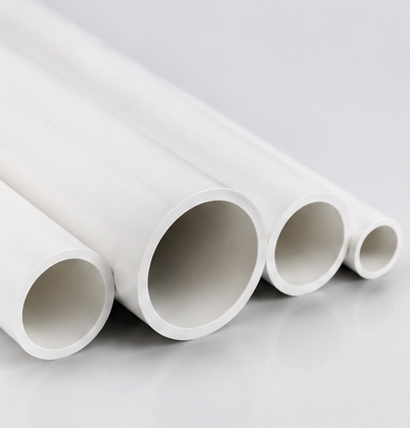
ABS solvent cement is designed to bond ABS material directly. The cement briefly softens the pipe and fitting socket, then the two surfaces fuse as the joint sets. This one-step process is one reason ABS pipe is often valued for drainage, wastewater, and underground sewer installations with many fittings. However, “no primer” never means “no preparation.” The joint still needs a square cut, clean surfaces, and full insertion into the fitting.
Dust, burrs, moisture, oil, or angled cuts can reduce contact even when the correct cement is used. A well-made joint comes from the full preparation sequence, not from simply skipping primer. This distinction is important for both DIY repair work and larger commercial drainage systems. Faster installation should come from the correct process, not from rushed assembly.
PVC primer is not a universal liquid for every plastic pipe. Applying it to ABS can create a messy joint, confuse inspection, or interfere with the expected cementing process. Extra chemicals do not strengthen a system when the joining method was designed without them. Correct cement selection is more valuable than adding primer “just to be safe.”
Wrong cement is an even bigger risk. PVC cement should not be used as a substitute for ABS cement, and ordinary ABS cement should not be used casually for ABS-to-PVC transitions. A joint may look acceptable after assembly but fail later under movement, thermal change, or wastewater flow. Material chemistry matters more than appearance.
After confirming that primer is usually unnecessary, the next step is building a dependable joint. ABS pipe installation should be treated as controlled solvent welding rather than ordinary gluing. Drainage, wastewater, vent, agricultural, and suitable industrial systems depend on joints that stay sealed after burial, vibration, cleaning, and daily flow. A careful method protects both leak resistance and smooth internal flow.
ABS pipe should be joined with ABS-specific solvent cement when the pipe and fitting are both ABS. The cement should match the pipe material, fitting material, diameter range, and application. Fittings, couplings, elbows, tees, cleanouts, and repair parts should belong to a compatible ABS pipe and fittings system. Random mixing increases the chance of loose fit, weak bonding, or failed inspection.
Transition cement has a narrower purpose. It is used only where an approved ABS-to-PVC transition is required, not as a normal cement for every joint. Repairs and remodels often need this because older lines may already include PVC sections. Any transition between materials should be treated as a code-sensitive connection.
Good preparation starts with a square cut. A pipe cutter, fine-tooth saw, or approved cutting tool should leave an end that seats evenly inside the fitting socket. Burrs should be removed with a deburring tool, knife, or ABS pipe reamer so loose plastic does not scrape away cement or disturb flow. The surface should also be free from dirt, shavings, standing water, and oily residue.
Dry fitting helps confirm insertion depth, alignment, and fitting orientation before cement is applied. Drainage systems often include elbows, branches, traps, cleanouts, and vent connections, so one small angle error can transfer stress across several joints. Marking the socket depth helps verify full insertion during assembly. Careful preparation prevents more leaks than unnecessary primer ever could.
Set time and cure time are affected by pipe diameter, socket fit, temperature, humidity, and cement type. A small branch connection is usually less demanding than 3 inch, 4 inch, or 6 inch ABS pipe in a larger drainage or industrial fluid transport layout. Bigger pipe has more bonding surface and is easier to disturb if handled too early. Cold or damp jobsite conditions usually call for extra caution.
ABS is known for good impact resistance in cold environments, but the solvent-welded joint still needs time to develop strength. Moving, backfilling, or loading the line too soon can weaken the bond. For underground sewer lines or high-volume wastewater systems, cure time should be planned into the schedule. Treating it as a required step reduces hidden leak risk.
Most failures are not caused by the lack of primer. Leaks usually come from mismatched materials, poor preparation, rushed assembly, or jobsite conditions that were ignored. A joint can look clean outside while having poor contact inside the socket. That is why installation discipline matters as much as product quality.
One common mistake is using PVC cement on ABS pipe because the containers look similar on the shelf. Another is joining ABS and PVC without approved transition cement or a suitable mechanical transition fitting. These shortcuts may appear to work during dry fitting, but solvent welding depends on material compatibility. Complete ABS pipe and fittings compatibility is safer than treating pipes as interchangeable plastic parts.
A system-based purchasing approach reduces these errors. Pipes, fittings, repair kits, couplings, and accessories should be selected as parts of one drainage design. This applies to residential bathrooms, commercial wastewater lines, agricultural drainage runs, and selected industrial applications. The weakest joint often determines the service life of the whole line.
Angled cuts prevent the pipe from seating evenly in the socket. Burrs can scrape away cement, hold the joint open, or collect debris inside the drainage path. Uneven insertion leaves part of the bonding surface underdeveloped, while forced alignment adds stress before curing is complete. These errors are easy to miss because the outside of the fitting can still appear neat.
Accurate ABS pipe dimensions only help when the installer respects them. Outside diameter, wall thickness, fitting socket depth, and insertion angle all influence the contact area. Smooth inner walls support flow efficiency, but rough cuts and misalignment can create turbulence or snag points. Long runs may also sag if alignment and support are poor.
Cold weather, wet surfaces, dust, and rushed handling can reduce joint quality. The material may resist impact, but the joint still needs clean surfaces and enough time to set. Outdoor storage can expose pipe to sunlight, dirt, or mechanical damage before installation. Contractors should inspect ends, markings, and fitting sockets before cementing.
Underground installation adds support concerns. Bedding, slope, backfill, and mechanical protection affect whether the line stays aligned after burial. A well-made joint can still be stressed if the trench base is uneven or heavy backfill is dumped directly onto the pipe. For larger drainage projects, installation quality includes both the joint and the surrounding support.
Comparing ABS and PVC is useful when it supports a real project decision. ABS pipe is often selected for its one-step joining process, impact resistance, and cold-environment performance. PVC is widely available and may be preferred where outdoor exposure, regional code familiarity, or market supply is stronger. Neither material should be treated as automatically better in every drainage system.
The clearest installation difference is primer. PVC commonly uses primer before cementing, while ABS usually relies on ABS solvent cement without primer. That can simplify workflow, reduce the number of products carried, and shorten repetitive installation steps. For long drainage runs with many fittings, fewer steps can also reduce training errors.
ABS generally offers strong impact resistance and is often favored in colder environments or underground drainage applications. PVC may offer better UV resistance for exposed outdoor use and may be more common in some regulated markets. For indoor wastewater and vent systems, local code and project specifications often matter more than general preference. Buyers should also consider noise, support spacing, chemical exposure, and fitting availability.
Mixed systems are common in repairs and renovations. An old line may contain ABS, while a new section or municipal connection may involve PVC. Approved transition cement or mechanical transition fittings should be used where the two materials meet. Improvised joints can fail mechanically or be rejected during inspection.
Primer is only one part of a successful installation. The correct ABS pipe size, compatible fittings, and application match determine how the system performs after installation. A line that is too small can back up, while an oversized or poorly sloped line may not carry solids effectively. Buyers should use pipe size charts, project drawings, and local drainage requirements instead of guessing from appearance.
Common product options may include 3/4 inch, 3 inch, 4 inch, and 6 inch pipe, depending on the project. Smaller diameters may serve light-duty or specific branch applications, while larger diameters are used for commercial, municipal, agricultural, or higher-volume drainage systems. Diameter selection should reflect fixture load, wastewater volume, venting needs, slope, and maintenance access. Proper sizing also helps ensure that fittings and repair parts remain available.
ABS pipe dimensions affect how the pipe seats inside fittings and how reliable the solvent-welded joint becomes. Outside diameter, wall thickness, socket depth, and fitting tolerance must work together. A complete ABS pipe and fittings system reduces loose fit, excessive gap, and mismatched bonding surfaces. For industrial fluid transport, chemical compatibility and temperature conditions should also be checked before selection.
A practical system should be repairable. Couplings, replacement fittings, repair kit options, and reaming tools can reduce downtime when a section must be replaced. Cleanouts should be planned where blockage risk is higher or where maintenance access would otherwise be difficult. Good repair planning makes the system easier to own, not just easier to install.
ABS pipe generally does not require primer, but achieving a reliable, leak-free joint depends on careful preparation, correct cement selection, proper insertion, and adherence to local codes. Understanding these factors helps prevent common installation issues and ensures long-term performance in drainage, vent, and wastewater systems.
Products from Hebei Anduan Technology Industry Co., Ltd. support this process by providing high-quality ABS pipes and compatible fittings, designed to work seamlessly with ABS solvent cement. Using well-matched components can streamline installation, reduce errors, and maintain consistent performance across residential, commercial, and industrial applications.
A: ABS pipe typically does not need primer. Proper joint preparation, clean cuts, and ABS solvent cement are sufficient for a secure, leak-resistant connection.
A: Joining ABS to PVC requires approved transition cement or mechanical transition fittings. Regular ABS cement is not suitable for direct connections.
A: Cure time depends on pipe diameter, temperature, and humidity. Small pipes usually set within 15–20 minutes, while larger pipes may require up to 60 minutes.
A: Common issues include using incorrect cement, uneven cuts, incomplete insertion, and ignoring jobsite conditions, which can lead to leaks or weak joints.
A: Yes, when proper ABS solvent cement and preparation are used, joints are strong. Primer is not necessary for typical drainage or wastewater installations.
A: Primer is generally unnecessary, but local plumbing codes or specific project requirements may occasionally recommend it for certain applications.


