


loading
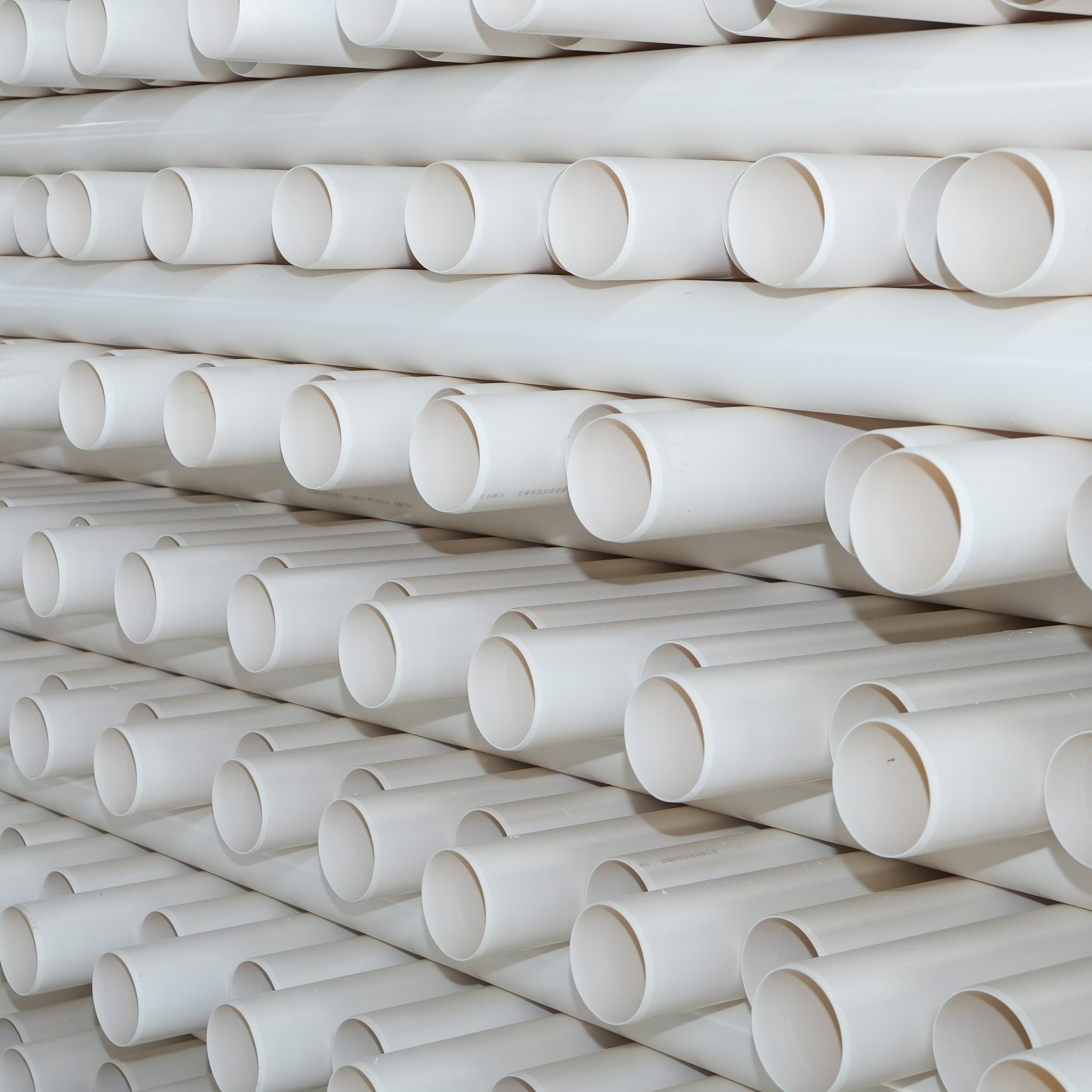
Made from ABS resin, this large-diameter, rigid conduit for low-voltage information cables is manufactured using processes such as formula-based stiffening and toughening, wall thickness gradient optimization, and circumferential structural reinforcement. It is a large-diameter upgrade of conventional small-to-medium diameter ABS communication pipes. It overcomes the limitations of conventional ABS pipes in small-to-medium diameter molding, retaining the core advantages of ABS material such as insulation, impact resistance, corrosion resistance, and dimensional stability, while strengthening ring stiffness, external pressure resistance, and flow capacity. It is primarily designed for main trunk lines and centralized laying of low-voltage information networks, accommodating the need for multiple fiber optic cables/low-voltage cables to be laid in the same conduit. Unlike small-to-medium diameter ABS pipes used for household/branch laying and large-diameter PE communication pipes used for flexible buried laying, it is the preferred pipe material for large-diameter low-voltage trunk line laying, balancing rigidity and protection. The standard nominal outer diameter is defined as dn75mm and above (mainstream dn75~dn200mm), providing dedicated support for low-voltage trunk networks in municipalities, large industrial parks, and transportation hubs.
Large-diameter ABS communication pipes are primarily rigid in structure, with core features centered around "large-diameter flow capacity + high-performance ABS base material + resistance to external pressure when buried." They address the pain points of large-diameter pipes being prone to deformation and lacking sufficient resistance to external pressure through specialized technical optimization, while retaining the core advantages of ABS material for low-voltage protection, ensuring both structural stability for buried installation and refined protection for low-voltage cables.
Using a high-rigidity toughened ABS formula, combined with heavy-duty wall thickness/circumferential reinforcement structure, it achieves large-diameter extrusion molding from dn75 to dn200mm. The regular ring stiffness reaches SN4 and SN8, and some reinforced models can reach SN10, capable of withstanding the static load of soil after burial and the slight dynamic load of municipal roads/park roads. The pipe body remains free from collapse and plastic deformation, solving the industry pain point of easy deformation in ordinary large-diameter ABS pipes.
Still made of pure insulating polymer material, its dielectric strength and volume resistivity meet national standards for low-voltage pipes, effectively isolating stray currents from the soil and external electromagnetic interference, preventing signal crosstalk/attenuation when multiple optical cables/wires are laid in the same pipe; the inner wall is precisely smooth and burr-free, preventing scratching of the outer sheath of optical cables/insulation layer of wires during threading, ensuring the stability of low-voltage transmission.
Toughening agents are added to the formula, achieving a balance between high rigidity and high impact resistance, far superior to large-diameter PVC communication pipes of the same specifications: bumps/compressions during lifting, handling, and laying during construction will not cause cracking or chipping of the pipe body, and it is not easily damaged by compression from hard objects such as stones in the soil after burial. There is no risk of brittle fracture in low-temperature environments in northern regions (-30℃), and its environmental adaptability is far superior to large-diameter PVC pipes.
Continuing the inherent advantage of ABS material's low thermal expansion coefficient, the operating temperature range is -30℃~80℃. When buried underground, it is less affected by diurnal/seasonal changes in soil temperature, preventing pipe shrinkage, bulging, or loose joints. When installed above ground, it avoids high-temperature softening and low-temperature brittleness. Compared to large-diameter PE communication pipes (which have poor rigidity and are prone to sagging and deformation when installed above ground), it is more suitable for both buried and above-ground applications.
The main specifications are dn75, dn90, dn110, dn160, and dn200mm. The large inner diameter allows for the simultaneous laying of multiple communication optical cables and low-voltage main cables in the same pipe (e.g., a dn110 pipe can accommodate 6-8 conventional optical cables), replacing the parallel laying of multiple small-diameter pipes, reducing trench excavation width and pipeline footprint, and improving the efficiency of low-voltage network installation.
The pure modified ABS material does not react with acids, alkalis, salts, sulfides, mildly corrosive media in the soil, or with wall cement mortar and underground moisture. It is free from rust, swelling, and aging, and can be used stably in ordinary soil, mildly saline-alkali land, and mixed fill soil environments along municipal roads without any anti-corrosion treatment. The designed service life is over 30 years.
It is equipped with three connection methods: heavy-duty rubber ring flexible socket connection, hot-melt butt welding, and special socket bonding. The sealing structure has been optimized for large-diameter pipes in buried conditions. After connection, it achieves zero leakage, effectively preventing groundwater and sediment from entering the pipe, avoiding water immersion and sediment abrasion of multiple cables, providing fully enclosed protection for low-voltage main pipes, and is suitable for long-term installation in humid underground environments.
Although it features a heavy-duty wall thickness/reinforced structure, its density is still far lower than that of large-diameter plastic-coated steel pipes and cement communication pipes. For the same specifications, the weight is only 1/8 of steel pipes and 1/10 of cement pipes. DN160 and smaller sizes can be laid with small lifting equipment and manual assistance, while DN200 sizes can be handled with conventional forklifts/cranes, eliminating the need for heavy lifting equipment; the pipes are easy to cut and grind on-site, allowing for flexible adjustments at the construction site.
A flame-retardant modified version (B1 fire-retardant grade) can be customized according to project needs, using environmentally friendly halogen-free flame retardants to achieve self-extinguishing upon removal from fire, low smoke, and low toxicity, meeting the fire safety requirements for large-diameter low-voltage trunk lines in urban core areas, densely populated places, and high-risk fire areas; the non-flame-retardant version is suitable for conventional outdoor buried applications without fire safety requirements, while also considering project costs.
The production raw material is environmentally friendly modified ABS resin, with no toxic or harmful substances released. The production and use process will not cause secondary pollution to soil or water bodies; after the pipes are scrapped, they can be melted down and recycled, and the reinforcing/flame-retardant modified components do not affect the recycling rate, meeting the building material requirements of municipal and industrial park green engineering projects.
| Pipe Type | Core Structure | Ring Stiffness | Key Advantages | Key Disadvantages | Typical Installation Scenarios |
| Large-diameter ABS communication pipes | Rigid solid wall / Reinforced | SN4~SN10 | High rigidity, impact and corrosion resistance, insulation and interference protection, dimensional stability | For pipe diameters larger than DN200, molding is limited. | Large-diameter low-voltage main conduits, buried and surface-mounted, with multiple cables laid together |
| Large-diameter PE communication pipes | Flexible solid wall / Corrugated pipe | SN4~SN8 | Good flexibility, suitable for trenchless installation, excellent corrosion resistance | Poor rigidity, prone to deformation and sagging when exposed. | Large-diameter low-voltage buried conduits, trenchless crossing, outdoor branch main conduits |
| Large-diameter PVC communication pipes | Rigid solid wall | SN4~SN8 | Low cost, full range of specifications | Poor impact resistance, brittle at low temperatures, and prone to aging. | Standard low-requirement outdoor buried low-voltage main conduits |
| Large-diameter plastic-coated steel pipes | Metal base + plastic coating | ≥SN16 | Extremely high mechanical strength, resistant to heavy loads | Heavy weight, high cost, electrically conductive, and requires corrosion protection. | Heavy-duty, corrosion-resistant low-voltage main conduits for special environments |
The core use of large-diameter ABS communication pipes revolves around "large-diameter main pipes for low-voltage information networks and concentrated laying of multiple cables." It is primarily used for laying low-voltage main pipes in municipal areas, large industrial parks, and transportation hubs. It is suitable for the main low-voltage transmission from communication rooms/base stations to areas/zones, and meets the needs of laying multiple optical cables/low-voltage cables in the same pipe. It can protect communication optical cables, broadcasting optical cables, main network cables in industrial parks, and centralized monitoring cables. It supports buried laying (core application), surface laying/cable tray laying, and can also be customized with flame-retardant features to adapt to large-diameter low-voltage main pipe scenarios with fire protection requirements. It is a complementary product to small and medium-diameter ABS communication pipes, forming a complete ABS low-voltage pipe network system of "large-diameter main pipes + small and medium-diameter branch/household pipes."
1. Pre-embedding of municipal low-voltage main pipe networks in new urban areas, central business districts, and industrial parks, with concentrated laying of communication optical cables from urban communication rooms/base stations to the area, adapting to the requirements of "one-time pre-embedding and long-term use" of new urban low-voltage pipe networks, while considering external pressure resistance and signal protection;
2. Laying of municipal communication main pipes in urban secondary roads, urban-rural junctions, and towns, connecting the urban main network with the town branch network. Laying multiple optical cables in the same pipe reduces the number of trenches dug, lowering the overall cost of municipal engineering;
3. Centralized low-voltage main pipes in urban parks, large squares, and new cultural and tourism cities, covering the concentrated laying of main low-voltage lines such as monitoring, network, and broadcasting within the park. Buried laying is suitable for outdoor environments, and surface laying is suitable for cable trays/pipe corridors in the park.
1. Low-voltage main conduits in national-level economic development zones, high-tech zones, and logistics parks, connecting the park's communication base stations with various industrial/warehousing zones, enabling centralized transmission of fiber optic cables, network lines, and monitoring main lines. Buried installation is adapted to the light vehicle load of the park roads;
2. Low-voltage main conduits in large manufacturing plants and metallurgical/chemical parks (non-explosion-proof areas), providing main low-voltage cable laying from the plant's power distribution room/communication room to various production workshops/office areas. Corrosion resistance is adapted to ordinary soil/slightly corrosive environments in the plant area, and good rigidity prevents damage from collisions with engineering vehicles;
3. Low-voltage main networks in universities, large elderly care communities, and cultural tourism complexes, covering the centralized laying of fiber optic cables, monitoring main lines, and broadcast lines within the campus/community. Buried installation is adapted to the park roads, and surface installation is adapted to the cable tray systems in the campus/community.
1. Low-voltage main conduits in transportation hubs such as high-speed rail stations, airports, and large bus stations, connecting the hub's communication equipment room with the low-voltage branch networks in waiting areas/ticket halls. Multiple monitoring, broadcasting, and network lines are laid centrally, adapting to the buried/cable tray installation requirements within the hub;
2. Low-voltage main conduits in highway service area clusters and port logistics parks, covering the transmission of low-voltage main lines across multiple service areas/port operation areas. Buried installation is adapted to the soil environment around outdoor highways/ports, and impact resistance meets the durability requirements for outdoor construction and use.
1. Low-voltage conduits in urban underground utility tunnels, connecting to small and medium-diameter low-voltage branch pipes within the tunnel, enabling centralized laying of municipal low-voltage main lines within the tunnel. The rigid structure adapts to the spatial layout of the tunnel and is not easily deformed;
2. Outdoor low-voltage cable tray conduits for large building complexes and office building clusters, connecting the low-voltage shafts of the cluster buildings. Large-diameter conduits enable centralized transmission of multiple fiber optic cables. Surface mounting adapts to cable tray laying requirements, with stable dimensions and no sagging deformation.
1. Buried flame-retardant low-voltage conduits in urban core business districts and areas with high population density, using flame-retardant B1 grade large-diameter ABS pipes, balancing the centralized laying of large-diameter fiber optic cables with fire protection requirements, preventing the pipes from contributing to combustion or releasing toxic gases during a fire;
2. Outdoor low-voltage main conduits for high-rise building clusters and underground commercial streets, connecting building low-voltage shafts to the municipal main network. The flame-retardant version adapts to the fire protection regulations of the building cluster, and buried laying allows for safe co-location with the fire protection pipeline network.
1. Low-voltage supporting conduits around large data centers and communication base stations, enabling centralized transmission of fiber optic cables from the base station/data center to surrounding areas. Insulation prevents electromagnetic interference from affecting data transmission stability;
2. Low-voltage main conduits for new rural construction and concentrated residential areas in towns and townships, covering the centralized laying of communication and network main lines in towns and townships. Large-diameter pipes reduce the amount of future pipeline network renovation work and adapt to the construction conditions and long-term use needs of towns and townships.
Large-diameter ABS communication pipes are the main pipe products in the ABS low-voltage communication pipe family. Their core value lies in breaking through the large-diameter molding technology of ABS pipes, achieving a triple combination of "large-diameter flow capacity + high-performance protection of ABS base material + resistance to external pressure when buried," filling the product category gap in large-diameter low-voltage main pipes regarding "rigid protection, high impact resistance, and insulation against interference."
Working in conjunction with small and medium-diameter ABS communication pipes, they form a complete ABS low-voltage pipe network system of "main pipe + branch + household connection." Compared with large-diameter PE communication pipes, they are more suitable for surface-mounted/cable tray scenarios; compared with large-diameter PVC pipes, they are more durable and have better environmental adaptability; and compared with coated steel pipes, they are lighter, more insulating, and more cost-effective. They are a cost-effective and highly suitable choice for laying large-diameter low-voltage main pipes in municipal, large industrial parks, transportation hubs, and other fields, and also enable ABS pipes to achieve full-specification coverage of low-voltage pipe networks from household connections to main pipes.


