




loading
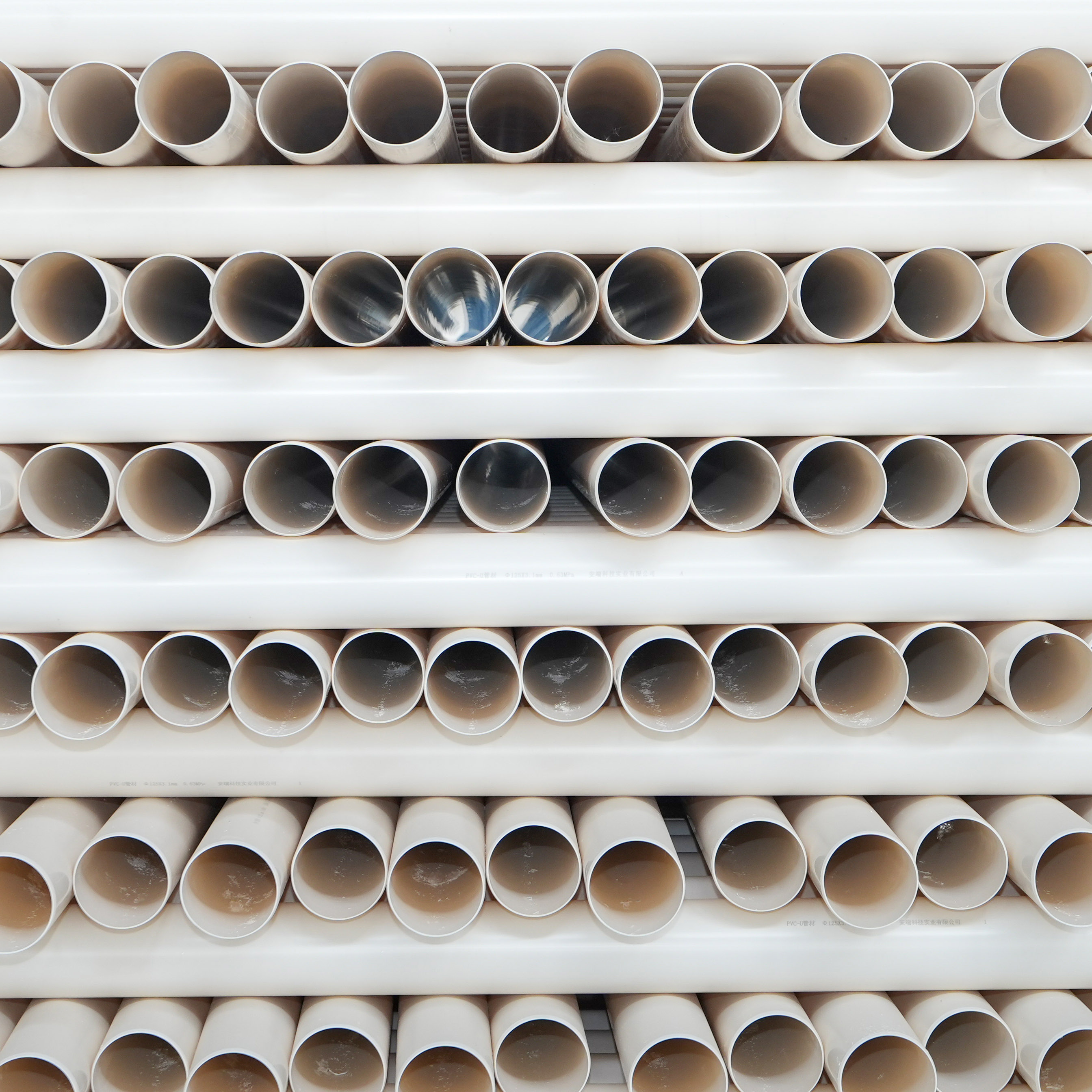
Made from ABS as the core raw material and manufactured through extrusion molding, this rigid, specialized conduit for low-voltage information cables is the mainstream protective piping material for communication, network, and broadcasting low-voltage information lines in municipal, construction, and industrial park applications. Leveraging the high rigidity, high impact resistance, excellent insulation, and dimensional stability of ABS material, it is specifically designed for the laying of low-voltage information cables such as fiber optic cables, network cables, cable TV lines, and building intercom lines. It is suitable for various installation methods, including buried, surface-mounted, through-beam and through-wall installations, and within cable trays. Unlike MPP power pipes (for high-voltage power) and PE pipes (for large-diameter buried communication lines), it focuses on small and medium diameters, is suitable for both indoor and outdoor use, and provides refined protection for low-voltage information networks, making it a core supporting piping material for low-voltage information networks.
The features of rigid ABS communication pipes are based on the inherent advantages of ABS material and the specific protection requirements for low-voltage information pipelines. They combine a rigid structure with excellent overall performance, meeting the needs of laying, protecting, and maintaining low-voltage cables.
ABS material is a high-molecular material combining hardness and toughness. The pipes have strong rigidity, are not easily deformed or collapsed, and can withstand the static load of soil after burial and light vehicle dynamic loads. At the same time, their impact resistance is far superior to PVC communication pipes. They are not easily damaged by bumps and drops during construction, and can withstand minor external impacts when laid above ground, ensuring both structural stability and construction durability.
Rigid ABS is an insulating polymer material with stable dielectric properties and no conductivity. It can effectively isolate stray currents from the soil and external electromagnetic interference, preventing signal attenuation and crosstalk in low-voltage cables (fiber optic cables, network cables), and ensuring the transmission stability of communication and network signals. This is a core protection feature for low-voltage information pipelines.
The inner wall of the pipe is precisely extruded and molded, smooth without burrs or unevenness, and has minimal friction resistance. Fiber optic cables and network cables can be easily threaded through the pipe manually or mechanically without scratching the insulation layer/outer sheath of the cables; it also reduces the tensile force loss during cable threading, reducing the difficulty of future pipeline maintenance.
ABS material has a low coefficient of thermal expansion. The pipes maintain good dimensional stability over a wide temperature range of **-40℃ to 80℃**. They do not become brittle and crack in the low temperatures of northern winters, nor do they soften and deform in the high temperatures of southern summers. They are less affected by soil temperature changes when buried, and do not require additional heat/freeze protection when laid above ground, demonstrating strong environmental adaptability.
Made of pure ABS material, it does not react with acids, alkalis, salts, sulfides, or mildly corrosive media in the soil. It is rust-free, swelling-free, and aging-resistant, and can be used stably in ordinary soil, mildly saline-alkali land, and within building walls/concrete. No anti-corrosion treatment is required, and the designed service life can reach more than 30 years.
The pipe material has a low density and is much lighter than steel pipes and concrete pipes, and even lighter than rigid PVC pipes of the same specifications. Conventional small and medium diameters (dn20~dn110) can be directly handled, cut, and laid manually without large equipment; the pipe material is easy to process and can be quickly cut on-site according to needs, adapting to the flexible laying requirements of the construction site.
It supports multiple connection methods such as socket connection, adhesive connection, and rubber ring sealing connection. The connection process is simple, and after bonding/sealing, it can achieve good waterproof and sand-proof effects, effectively preventing groundwater, sand, and dust from entering the pipe, avoiding water immersion and sand abrasion of weak current cables, and providing a fully enclosed protective environment for the cables; the joints are not prone to leakage during buried laying, adapting to humid underground environments.
The conventional model has basic flame retardancy, and the modified model can achieve flame retardancy/fire resistance class B. It is not easy to burn continuously when exposed to open flames, and no toxic or harmful gases are released during combustion, meeting the fire safety requirements of enclosed spaces such as building interiors, weak current shafts, and cable trays, and complying with the laying specifications of building weak current pipelines.
The product mainly features small and medium diameters, with standard nominal outer diameters of dn20, dn25, dn32, dn40, dn50, dn63, dn75, and dn110mm. Wall thickness is available in light, medium, and heavy types, allowing for flexible selection based on the number of cables, laying method (underground/surface), and operating environment. It is available in both coiled and straight pipe forms; coiled pipes are suitable for small-diameter, short-distance flexible laying, while straight pipes are suitable for large-diameter, long-distance underground/surface laying.
The production raw material is environmentally friendly ABS resin, which does not release toxic or harmful substances. The production and use processes will not cause secondary pollution to soil, water bodies, or indoor environments. After the pipes are scrapped, they can be recycled and remelted for reprocessing, resulting in high resource utilization and meeting the building material requirements of municipal low-voltage and green building projects.
| Pipe Types | Core Advantages | Core shortcomings | Installation suitability |
| Rigid ABS communication pipe | High impact resistance, dimensional stability, smooth wire threading | Limited large-diameter molding capabilities | Small and medium diameters, suitable for indoor and outdoor use, buried/surface installation |
| Rigid PVC communication pipe | Low cost, complete range of specifications | Poor impact resistance and prone to brittle fracture at low temperatures | Buried/surface installation in general scenarios |
| HDPE communication pipe | Good flexibility, excellent corrosion resistance | Insufficient rigidity, easily deformed when exposed | Large diameter buried installation, trenchless crossing |
| Plastic-coated steel pipe | Extremely high mechanical strength | Heavy weight, high cost, and easily conductive | Heavy load and highly corrosive special scenarios |
Rigid ABS communication pipes are specialized protective conduits for low-voltage information lines. They are primarily used for the laying and protection of all low-voltage cables, including fiber optic cables, network cables, cable TV lines, building intercom lines, security monitoring lines, and fire protection low-voltage lines. They cover all low-voltage engineering scenarios, including municipal communications, building low-voltage systems, park infrastructure, and transportation hubs. They are suitable for various laying methods, such as buried, surface-mounted, through beams and walls, in low-voltage shafts, and in cable trays, making them the preferred pipe material for small and medium-diameter low-voltage information networks.
1.Buried protection of municipal communication fiber optic cables and cable TV fiber optic cables on urban main roads, secondary roads, and surrounding roads of residential areas; pre-embedding of urban low-voltage networks; low-voltage isolation protection (anti-electromagnetic interference) for communication pipes and power pipes laid in the same trench;
2. Buried/surface-mounted protection of WiFi signal cables and security monitoring lines in public places such as urban pedestrian streets, parks, and squares, balancing construction convenience and signal protection;
3. Laying of main communication networks in urban-rural areas and towns, adapting to the construction conditions of low-voltage projects in towns, being lightweight, easy to lay, and maintenance-free.
1.Building low-voltage pre-embedding in residential buildings, office buildings, and commercial complexes: protection of network cables, cable TV lines, and building intercom lines through beams and walls; centralized protection of cables in low-voltage shafts and cable trays; buried protection of communication fiber optic cables on outdoor community roads;
2. Low-voltage network systems in schools, hospitals, hotels, and cultural tourism projects: laying of campus monitoring lines and network lines; protection of hospital security lines and call system low-voltage lines; indoor pipe protection of hotel guest room network cables and TV lines;
3. Protection of security monitoring lines and fire protection low-voltage lines in underground garages and civil defense projects, adapting to the corrosion resistance and sealing requirements of humid and confined underground environments.
1.Laying of communication, network, and monitoring cables in industrial parks, economic development zones, and logistics parks; buried protection of low-voltage fiber optic cables along factory roads; and conduit protection for equipment control lines and network cables within workshops;
2. Low-voltage electrical wiring for building intercoms, security monitoring, and office networks in light industry and manufacturing factories, adapted to the general laying requirements inside and outside the factory;
3. Low-voltage electrical wiring in non-core areas of mining and metallurgical parks, considering the corrosion resistance of typical mining soil and impact resistance during construction.
1.Low-voltage electrical wiring for transportation hubs such as high-speed rail stations, airports, bus stations, and ports: indoor and outdoor laying and protection of monitoring lines, broadcasting lines, and network lines; and low-voltage cable protection through beams and walls in waiting areas and terminals;
2. Low-voltage electrical systems for service areas and toll stations on expressways and national highways: buried/surface laying protection of monitoring lines, toll system low-voltage lines, and network lines, adapted to the decentralized laying requirements of transportation auxiliary facilities;
3. Protection of security monitoring and dispatch communication lines for urban rail transit and bus stations, considering the refined protection of low-voltage systems in urban public transportation.
1.Security monitoring systems for urban roads, residential areas, and parks: buried/surface laying protection of camera connection lines and control lines to ensure stable transmission of monitoring signals;
2. Internet of Things low-voltage electrical wiring for smart communities and smart parks: conduit protection for sensor connection lines and data transmission lines, adapted to the refined laying requirements of intelligent engineering;
3. Protection of security alarm lines and monitoring lines in key locations such as banks, shopping malls, and museums, considering sealing, insulation, and anti-tampering performance.
1.Underground Laying: Low-voltage cables and main communication lines in urban/industrial park roads, and outdoor low-voltage conduits in residential areas; suitable for static and light dynamic soil loads, corrosion-resistant and impact-resistant;
2. Surface/Cable Tray Laying: Low-voltage cables in building interiors, electrical shafts, and workshops, and pipelines in high-speed rail stations/airport terminals; utilizes high rigidity, resistance to deformation, and provides insulation and interference protection;
3. Through-Beam/Through-Wall Laying: Indoor low-voltage pre-embedding in buildings, wall/beam conduit for network and TV cables; easy to cut and thread, suitable for pre-embedding requirements in building construction;
4. Overhead Laying: Overhead protection for short-distance low-voltage cables in towns and industrial parks; utilizes lightweight advantages, can be easily installed overhead with brackets, low cost and fast construction.
Rigid ABS communication pipes are specialized protective conduits for small and medium-diameter low-voltage information lines. With its core advantages of combined hardness and toughness, insulation and interference protection, smooth cable threading, and adaptability to multiple laying methods, it compensates for the shortcomings of PVC communication pipes (poor impact resistance) and HDPE communication pipes (insufficient rigidity). It meets the low-voltage protection needs for both indoor and outdoor applications, and is compatible with both underground and surface laying. It is a cost-effective mainstream choice for municipal communication network pre-embedding, building low-voltage pre-embedding, and intelligent infrastructure in industrial parks, and is currently a core supporting pipe material for refined low-voltage cable laying.


