

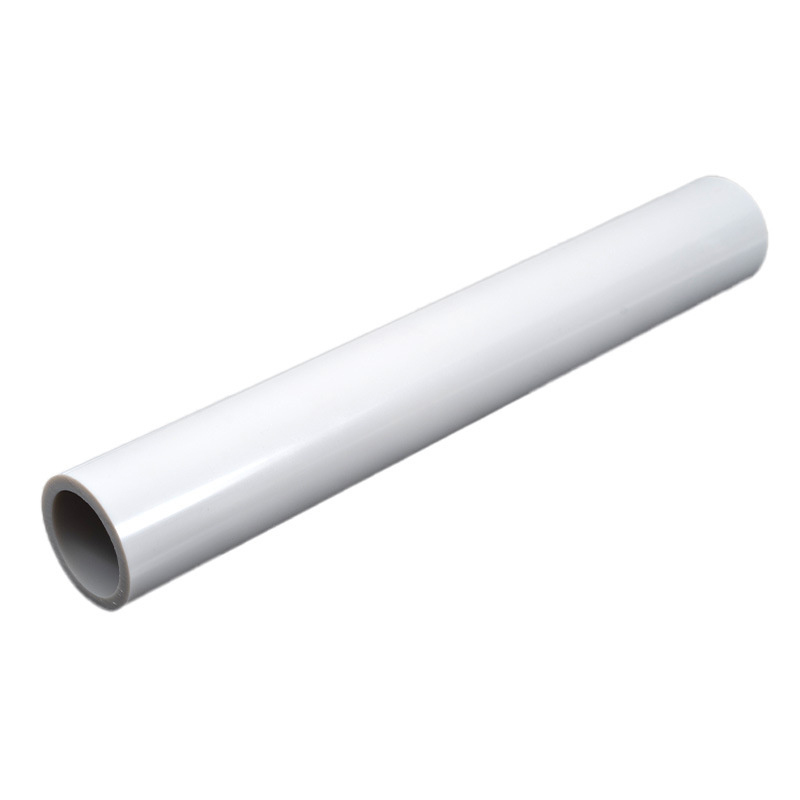

ABS plastic pipe is a new type of material, with a nominal pressure of 0.6 to 1.6Mpa, a linear expansion coefficient of 0.9mm/(m·℃), and connection methods including flange and bonding. It has poor resistance to gas penetration. ABS plastic pipes have low flow friction, significantly reducing fluid resistance and pump horsepower. They have good impact resistance, excellent mechanical strength and high impact toughness. When subjected to sudden attacks, they only undergo ductile deformation.
| Quantity: | |
|---|---|


Acrylonitrile Butadiene Styrene (ABS Pipe) represents a highly resilient thermoplastic piping solution engineered for demanding fluid management and cable protection environments. Running a hand along the exterior of these pipes reveals a smooth, matte finish that naturally resists surface abrasion, while the interior bore remains exceptionally slick to facilitate unimpeded flow dynamics. Formulated from premium-grade polymers, this piping system delivers exceptional mechanical strength and impact resistance, ensuring structural integrity even under severe physical stress. Its inherent dielectric properties make it an excellent insulator, preventing electrical leakage in complex infrastructure layouts. Because the material emits zero chemical odors and contains no toxic stabilizers, it provides a safe, dependable conduit for everything from sensitive pharmaceutical ingredients to heavy-duty industrial wastewater. Whether implemented in exposed above-ground networks or buried in submerged installations, this piping adapts to fluctuating operational conditions with consistent reliability.
The defining traits of this thermoplastic system center around its physical toughness, thermal stability, and internal flow efficiency. Unlike brittle metallic or inferior plastic alternatives, the material exhibits remarkable ductile deformation; a sudden heavy impact results in a dull thud and slight flexing rather than catastrophic cracking, ensuring uninterrupted fluid or cable protection.
Impact Ductility: Absorbs kinetic energy effectively, preventing fractures during handling or environmental shocks.
Dielectric Insulation: Shields internal electrical lines from external magnetic interference while preventing internal current leakage.
Hygienic Composition: Completely odorless and non-toxic, eliminating the risk of fluid contamination.
Chemical Deflection: Resists scaling, biological growth, and corrosive degradation in harsh ambient conditions.
Project | Technical indicators |
Ring stiffness | (23±2)℃,S1≥40.0kN/m²;S2≥80.0kN/m² |
Flattening test | It does not break when the pipe diameter is half (at 23℃) |
Vicat softening temperature | ≥135℃ |
Drop hammer impact | (-5℃),9/10Not broken |
Coefficient of thermal resistance | ≤4.6(℃•m)/w |
Withstand voltage test | It does not break down at 50kV |
Volume resistivity | ≥1.0×10⊃1;⊃1;Ω·m |

The physical lightness of this piping drastically alters the logistics of site installation. With a specific gravity significantly lower than carbon steel or cast iron, a standard 20-foot length of large-diameter pipe can easily be lifted and maneuvered by a two-person crew without the intervention of heavy motorized hoists. This tactile advantage becomes crucial when navigating tight utility shafts, suspended ceiling grids, or restricted trench spaces. The system accommodates versatile integration techniques, including secure flange connection and solvent bonding, which cure rapidly to form permanent, leak-proof joints. By eliminating the need for complex welding or heavy rigging, project managers can substantially accelerate construction timelines and reduce on-site labor expenditures.
Engineered for structural resilience, the pipe easily withstands compressive soil loads and external mechanical shocks. Its inherent ductility means that physical stress translates into slight bending rather than structural failure, creating a protective envelope for whatever is housed inside. Beyond physical strength, the material functions as an exceptional barrier against electrical hazards. The high volume resistivity effectively blocks stray electrical currents, preventing internal leakage while shielding sensitive data or power cables from external electromagnetic interference. This dual capability makes it an indispensable component for subterranean power grids and critical facility infrastructure.
Thermoplastic materials often struggle with thermal extremes, but this specific formulation maintains its structural integrity across a broad temperature spectrum. In freezing environments, such as outdoor winter installations or cold storage facilities, the pipe retains its impact resistance without becoming brittle or prone to shattering. Conversely, in elevated heat scenarios typical of industrial processing plants, it resists softening and maintains its rigidity. This thermal versatility ensures that engineers do not need to specify different piping materials for indoor, outdoor, or fluctuating temperature zones, thereby simplifying inventory and system design.
Manufactured strictly without heavy metal stabilizers, the piping presents a clean, odor-free profile that safeguards surrounding soil, groundwater, and human operators. The exceptionally slick interior bore minimizes friction, which not only lowers the energy required for fluid pumping but also prevents the accumulation of sludge, biological film, or mineral scaling. Because the exterior is impervious to rust and galvanic corrosion, the system requires virtually zero routine maintenance. Facility operators can expect decades of reliable service without the need for periodic chemical flushing, protective recoating, or premature section replacements.
In environments where purity dictates operations, such as the pharmaceutical industry and food industry, this piping serves as a primary conduit for sensitive ingredients. The non-leaching polymer structure ensures that transported fluids—whether purified water, liquid medications, or food-grade compounds—remain entirely uncontaminated from origin to destination. The mirror-like internal finish actively deters bacterial colonization, aligning with stringent sanitary protocols and ensuring end-product safety.
For pure water systems and extensive Drain, Waste, and Vent (DWV) architectures, the material provides a dependable, long-lasting transport network. It is heavily utilized across the environmental protection industry, particularly within municipal wastewater treatment facilities and chemical runoff containment systems. The polymer's innate resistance to acidic and alkaline compounds ensures that buried or submerged lines—including underwater cable conduits and effluent discharge pipes—do not degrade when exposed to aggressive soil chemistry or continuous moisture.
The petrochemical industry demands materials capable of surviving continuous exposure to harsh solvents and mechanical vibration. This piping is frequently deployed to transport industrial fluids, cooling water, and chemical slurries throughout processing refineries. Additionally, it acts as a primary protective sleeve for high-voltage wiring traversing hazardous plant zones. By maintaining its structural shape and chemical neutrality under duress, it significantly enhances the operational safety of heavy industrial sites.

The structural engineering of this piping balances extreme physical endurance with practical handling weight. Available in a comprehensive size range from 3/8" up to 12" diameters, the system accommodates diverse pressure ratings spanning from 90 to 230 psi. Project specifiers can select between traditional Solid Wall construction for high-pressure industrial fluid transport, or Cellular Core (foam core) structures specifically optimized for architectural DWV applications. The uniform wall thickness guarantees predictable pressure handling across the entire length of the run, while the ductile polymer matrix absorbs kinetic impacts without micro-fracturing.
Adaptability in the field is achieved through multiple pipe-end designs, including standard plain ends and precision-threaded configurations. The system supports two primary integration techniques: heavy-duty flange connection for high-pressure or frequently dismantled industrial lines, and chemical bonding for permanent, rapid-curing architectural installations. This compatibility extends to a vast ecosystem of standard fittings, valves, and transition adapters, allowing installers to navigate complex spatial layouts and integrate seamlessly with existing metallic or plastic networks.
Every aspect of the pipe is calibrated for long-term operational stability. The product strictly complies with international regulatory benchmarks, including ASTM, NSF, and ICC standards, validating its safety for both potable water and high-stress industrial environments. The superior electrical insulation properties, combined with exceptional resistance to environmental aging and chemical corrosion, ensure that the system performs predictably over decades. The frictionless internal surface continually minimizes pumping energy requirements, delivering a highly efficient fluid management solution.
Understanding that complex engineering projects require exact specifications, we offer deep customization options encompassing specific pipe dimensions, pressure ratings, and color-coding for utility identification. To ensure complete material compatibility before large-scale procurement, rapid prototyping and physical sample dispatch services are available, allowing site engineers to conduct hands-on evaluations and mitigate project risks.
Supported by a highly scaled manufacturing infrastructure and extensive on-hand inventory networks, the supply chain is structured to handle massive volume requirements without bottlenecking. Flexible order quantities accommodate both targeted facility upgrades and sprawling municipal developments, ensuring that critical materials arrive on-site precisely aligned with construction schedules.
To preserve the pristine exterior and structural integrity of the piping during global transit, rigorous packaging protocols are enforced. Pipes are securely bundled, strapped, and reinforced within custom crating to prevent surface abrasion and impact damage during maritime or overland freight. This meticulous logistical planning guarantees that materials arrive in installation-ready condition.
Procurement is backed by full-lifecycle engineering support. From initial system sizing and material selection guidance to the provision of certified Material Test Reports (MTRs) for compliance documentation, expert assistance is continuously accessible. On-site installation advice and long-term operational troubleshooting ensure that the piping infrastructure performs exactly as specified throughout its lifespan.
Yes, the piping is exceptionally well-suited for direct burial and continuous submersion. The polymer matrix is entirely unaffected by ground moisture, naturally occurring soil acids, or galvanic corrosion, eliminating the need for protective wrapping or cathodic protection. Its high compressive strength resists shifting earth loads, while the non-toxic formulation guarantees that no harmful chemicals will leach into surrounding groundwater or soil ecosystems. It is routinely specified for subterranean municipal waste lines and submerged industrial intakes.
The piping acts as a dual-purpose physical and electrical shield. Physically, the high-impact exterior deflects falling debris, accidental tool strikes, and vehicular pressure, preventing the crushing or slicing of internal fiber optics or copper wiring. Electrically, the material's outstanding electrical insulation prevents internal voltage from escaping into the surrounding environment while simultaneously blocking external electromagnetic fields from disrupting sensitive data transmissions. The ultra-smooth interior also reduces friction during the initial cable-pulling process, preventing jacket abrasion.


