

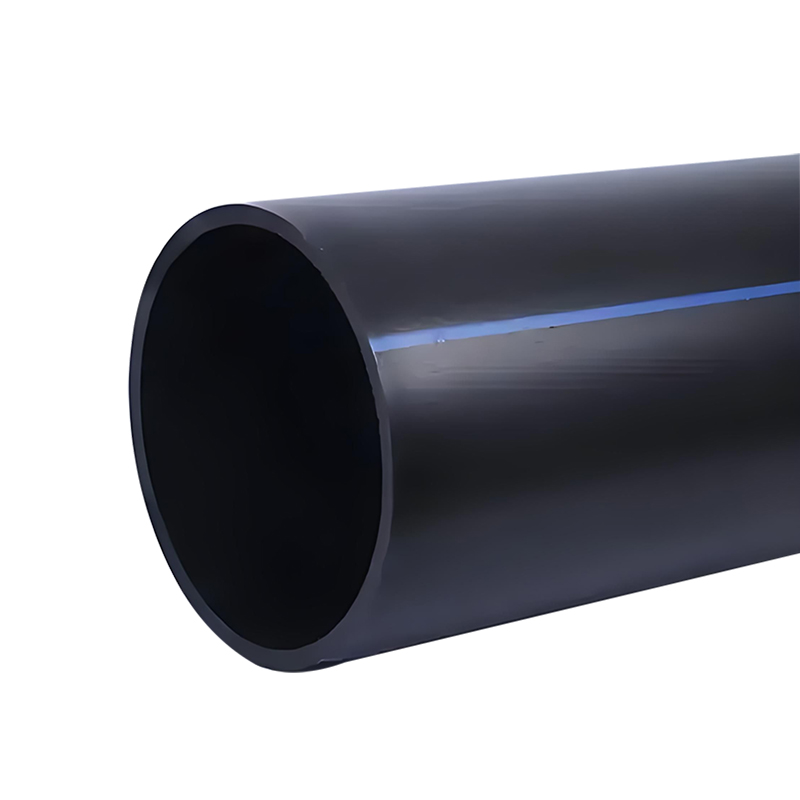

HDPE drainage pipes are currently widely used in the fields of municipal, building and industrial drainage. It is made of high-density polyethylene (HDPE) and has replaced traditional concrete pipes, cast iron pipes, etc. with its outstanding performance.
| Quantity: | |
|---|---|


Engineered from premium high-density polyethylene, this advanced drainage solution offers a dense, robust outer wall paired with a remarkably smooth, glass-like inner surface. It is meticulously designed to replace outdated concrete and heavy cast iron networks that often suffer from structural fatigue. By facilitating the rapid, unimpeded transport of municipal wastewater, aggressive industrial fluids, and stormwater, it presents a highly cost-effective and structurally sound alternative for large-scale infrastructure projects. The tactile sturdiness of the pipe, combined with its precise extrusion process, ensures it meets the demanding requirements of modern residential, civic, and industrial fluid management without premature degradation.
The transition to high-density polyethylene is driven by its unique ability to solve the inherent flaws of traditional piping materials. While concrete is prone to micro-cracking under soil settlement and metal inevitably falls victim to oxidative rust, this polymer matrix remains completely impervious to both. It absorbs ground shifts through its natural elasticity rather than fracturing. Choosing HDPE Drainage Pipe means investing in a low-maintenance, long-lasting network that drastically reduces future excavation and replacement costs, ensuring reliable, uninterrupted fluid conveyance for decades.
Parameter category | Technical indicators | Unit | Typical values/standard requirements | Parameter significance and Engineering impact |
Physical properties | Density | g/cm³ | 0.941 - 0.965 | Aligns with the core characteristics of high-density polyethylene, serving as the fundamental identifier of material grade and structural density. |
Melt mass flow rate | (MFR) | g/10min ≤ 0.5 (190℃/5kg) | Reflects the molecular weight size and distribution of the raw polymer. A lower value indicates higher molecular weight, translating to superior resistance against environmental stress cracking. | |
Tensile yield strength | MPa | ≥ 20 | Indicates the tensile strength of the material, forming the critical basis for the pipe's overall pressure resistance and defense against mechanical damage. | |
Elongation at break | % | ≥ 350 | A higher value in this key indicator demonstrates excellent material toughness, ensuring strong adaptability to uneven foundation settlement and soil shifting. | |
Elastic modulus | MPa | 600-900 | When measuring material stiffness, the relatively low modulus of this polymer indicates exceptional flexibility and impact absorption capabilities. | |
Coefficient of linear expansion | mm/(m·℃) | 0.15 - 0.22 | Approximately ten times that of steel pipes. When engineering long-distance pipeline networks, thermal expansion and contraction must be calculated, utilizing appropriate expansion joints. | |
Thermal conductivity | W/(m·K) | 0.4 - 0.5 | Delivers excellent thermal preservation performance—approximately 1/200th that of steel—resulting in minimal heat loss when transporting temperature-sensitive fluids. | |
Chemical properties | Chemical corrosion resistance | - | better | Core advantage: Withstands aggressive corrosion from most acids, alkalis, salts, and organic solvents, offering an exceptionally wide pH adaptability range (2-12). |
Environmental Stress Cracking (ESCR) | F₀ | ≥ 1000 | A critical metric measuring crack resistance under the combined stress of physical loads and chemical media, directly correlating to the extended long-term service life. | |
Oxidation induction time (OIT) | min | ≥ 20 (200℃) | Measures the material's defense against thermal oxidation and aging. A higher OIT value guarantees a significantly longer operational lifespan before degradation. | |
Hygienic performance | - | GB/T 17219 | When deployed for water transport, this standard ensures the material remains non-toxic, completely odorless, and prevents any secondary pollution to the fluid body. |

One of the most defining benefits of HDPE Drainage Pipe is its absolute immunity to a vast spectrum of aggressive substances, including concentrated acids, alkalis, salts, and harsh organic solvents. When handling industrial effluent, the material maintains its structural integrity without degrading, blistering, or flaking. This inherent chemical inertness completely eliminates the need for expensive, time-consuming anti-corrosion coatings or cathodic protection systems, saving significant upfront and ongoing maintenance capital.
The interior of the pipe features a frictionless finish that actively repels scale buildup and biological growth. This ultra-smooth inner wall dramatically reduces flow resistance, allowing for a faster and more efficient transit of fluids. Even when transporting heavily sediment-laden wastewater, the non-stick surface prevents clogging and sludge accumulation. This superior hydraulic efficiency minimizes the risk of system backups, overflows, and the need for frequent high-pressure cleaning.
Unlike rigid alternatives that shatter under pressure, this polymer exhibits a tough, yielding nature. Its inherent flexibility allows the pipeline to naturally bend and conform to unpredictable ground movements, foundation settlements, and even seismic activities. If struck by heavy debris or equipment during installation, the pipe absorbs the kinetic energy, locally deforming and rebounding rather than cracking, ensuring a secure, continuous channel even in demanding environments.
Weighing a fraction of comparable concrete or carbon steel alternatives, HDPE Drainage Pipe dramatically streamlines site logistics. The lightweight profile allows for easier loading, unloading, and trench positioning, often eliminating the need for heavy lifting cranes. This ease of handling translates directly into accelerated project timelines, reduced labor requirements, and a significantly safer working environment for installation crews.
Engineered for longevity, this system provides an operational lifespan that spans decades under optimal conditions, drastically reducing the frequency of infrastructure overhauls. Furthermore, the polyethylene composition is fully recyclable at the end of its life cycle. By minimizing the carbon footprint associated with frequent replacements and utilizing sustainable materials, it aligns with modern green building certifications and environmentally responsible construction practices.
As the backbone of urban sanitation networks, this piping is the preferred choice for collecting and directing large volumes of domestic and commercial wastewater to treatment facilities. Its completely leak-proof joints safeguard local aquifers by preventing hazardous effluent from seeping into the surrounding soil. By ensuring a sealed, efficient flow, it reduces the infiltration of groundwater into the sewage system, thereby optimizing the processing load at municipal treatment plants.

Effective stormwater management is critical for preventing urban flooding. In sprawling cities, residential subdivisions, and expansive commercial parking lots, this system rapidly captures and diverts heavy rainfall. The high volumetric flow capacity ensures that even during severe, sudden downpours, surface water is quickly channeled away, protecting property foundations and preventing disruptive waterlogging on roadways.
Beyond underground networks, this solution excels in vertical and horizontal drainage applications within large-scale structures like hospitals, schools, and high-rise residential complexes. The dense molecular structure of the polymer naturally dampens the acoustic vibrations of rushing water, resulting in a noticeably quieter environment. Combined with its clean aesthetic and resistance to household chemicals, it provides a highly reliable, low-noise indoor plumbing architecture.
The foundation of this system lies in its premium-grade polymer matrix, meticulously selected to deliver maximum tensile strength and environmental stress crack resistance. The manufacturing process strictly adheres to international benchmarks, including ASTM and AASHTO standards, ensuring every segment meets rigorous quality control criteria. This compliance guarantees that the physical and chemical properties remain stable, providing predictable, long-term performance across a multitude of demanding civic and industrial applications.
To ensure a completely unified network, the system utilizes advanced hot-melt butt welding and electrofusion techniques. During installation, the melted polymer fuses to form a solid, continuous bead that is structurally stronger than the pipe wall itself. To support diverse engineering layouts, a comprehensive suite of standard fittings—including flanges, sealing rings, and custom adapters—is available, delivering a one-stop, zero-leakage connection strategy that eliminates the risk of joint failure and fluid seepage.
Recognizing that no two excavation sites are identical, the pipeline is engineered with a high degree of structural adaptability. It easily navigates uneven trench beds, soft soil foundations, and areas prone to mining subsidence. For specialized projects, deep OEM/ODM customization services are available, allowing for precise modifications to pipe diameters, wall thicknesses, and the integration of high-wear or UV-resistant material formulations to perfectly match complex geological challenges.
Securing the right materials is only one part of a successful infrastructure project; reliable fulfillment and expert backing are equally critical. Backed by modern extrusion lines and substantial annual manufacturing capacity, large-scale orders are processed with speed and precision, ensuring strict adherence to project timelines without delay. To optimize global transit, multiple packaging configurations—including space-saving steel frames, secure pallets, and bulk nesting—are utilized to maximize container efficiency, reduce logistics costs, and safeguard the structural integrity of the pipes during shipping.
Beyond physical delivery, comprehensive technical empowerment is provided for every phase of construction. Engineering teams receive complimentary access to detailed CAD layouts, step-by-step installation manuals, and specialized calculation tools to streamline site planning. This commitment to excellence is reinforced by a robust warranty program and a projected design life spanning decades. A dedicated maintenance and after-sales team remains on standby, ready to provide rapid, professional responses to ensure continuous operational success.
This highly versatile piping is engineered to safely convey a massive variety of liquids. It effortlessly handles standard domestic sewage and stormwater runoff, while its robust chemical inertness makes it perfectly suited for aggressive industrial wastewater, agricultural effluents containing fertilizers, and even highly corrosive seawater. It reliably manages fluids across an expansive pH spectrum without degrading.
Yes, the polymer matrix is specifically stabilized to perform flawlessly across extreme temperature fluctuations. In freezing environments, the pipe retains its impact resistance without becoming brittle or shattering. Conversely, in intense heat, it maintains its structural rigidity and pressure ratings. This thermal resilience makes it an ideal choice for diverse geographic locations.
Absolutely. The inherent flexibility and availability of long, continuous single lengths make this system the premier choice for modern trenchless installation methods, such as horizontal directional drilling (HDD) and pipe jacking. These techniques drastically minimize surface excavation, reducing traffic disruption, lowering restoration costs, and accelerating overall project completion.


