
Views: 0 Author: Site Editor Publish Time: 2026-05-21 Origin: Site


Many buyers start with the question, “Why is ABS cheaper than PVC?” but the better answer is more nuanced: in most markets, PVC is usually cheaper than ABS at the material level. The confusion comes from installation. An ABS pipe system can sometimes feel less expensive because it often uses a faster one-step solvent cement process in drain, waste, and vent work, while PVC commonly involves primer plus cement.
For anyone comparing ABS pipe with PVC pipe, the real question is not only the price of one 10-foot stick. This guide breaks the cost issue into the parts that actually affect a project: material price, installation labor, ABS solvent cement versus PVC primer, local building code, and when ABS pipe may still be the smarter choice.
PVC pipe has a strong cost advantage because Polyvinyl Chloride is produced at enormous scale. The material is used in plumbing, irrigation, electrical conduit, siding, flooring, profiles, packaging, and many industrial products, so manufacturers can spread production and distribution costs across a much wider market. That scale makes PVC easier to stock at home centers and plumbing supply houses, which usually keeps the shelf price lower.
The raw material structure also matters. PVC is made from vinyl chloride monomer, which comes from ethylene and chlorine. Chlorine is derived from salt chemistry, so a large part of the polymer is tied to a relatively abundant industrial input rather than only to petroleum-based monomers.
By comparison, ABS pipe is made from Acrylonitrile Butadiene Styrene, a more specialized thermoplastic blend. It is valued for toughness, impact resistance, and cold-weather handling, but those benefits come with higher material and production costs. When a buyer compares only pipe sticks of the same diameter, PVC often looks like the cheaper product because it usually is.
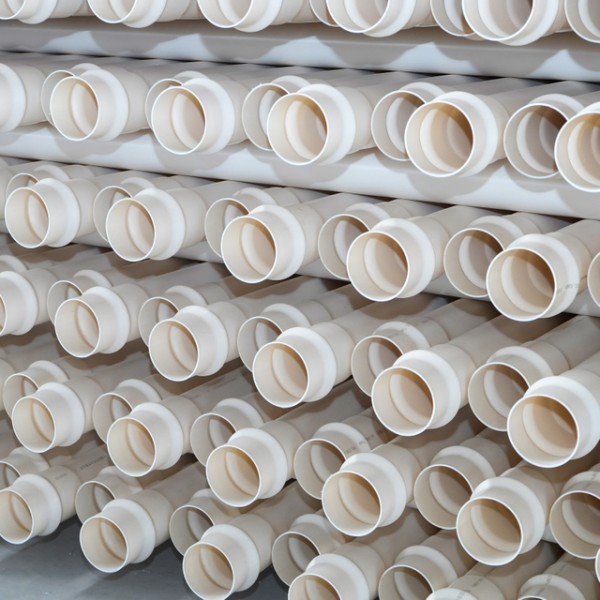
Installation is where the price story changes. An ABS pipe joint is commonly assembled with ABS solvent cement in a one-step process. PVC installations often require primer first, then cement, which adds material cost, handling time, and cleanup.
For a small drain repair under a sink, the labor difference may be minor. For a professional rough-in with dozens of fittings, every extra step can add time. A plumber who is working with an existing ABS pipe drain line may finish faster by matching the current system instead of converting part of the run to PVC.
That does not automatically make ABS the cheaper choice. Poor cuts, rushed dry fitting, or weak solvent-weld joints can erase any labor savings. Fast installation is only valuable when the joint is made correctly and the material is accepted by local code.
The cheapest pipe stick is rarely the cheapest installed system. Buyers should price the entire basket: pipe, ABS fittings, PVC fittings, cement, primer, hangers, cleanouts, transition coupling, saw blades, inspection requirements, and labor. A mixed-material repair may also require an approved ABS-to-PVC transition cement or a shielded mechanical coupling.
Cost Factor | ABS Pipe | PVC Pipe | Practical Takeaway |
Pipe material | Often higher | Often lower | PVC usually wins on shelf price |
Joining materials | Cement only in many DWV jobs | Primer plus cement in many jobs | ABS may reduce steps |
Labor time | Faster when allowed and familiar | Slightly longer due to primer | Labor can narrow the cost gap |
Fittings availability | Regional variation | Broad availability | PVC may be easier to source |
Inspection risk | Depends on local code | Often familiar to inspectors | Code can override price |
Repairs and transitions | Easy if system is already ABS | Easy if system is already PVC | Matching existing material often saves money |
ABS is not a single-purpose commodity plastic. Acrylonitrile contributes chemical resistance and thermal stability, butadiene improves toughness and impact behavior, and styrene adds rigidity, surface finish, and processability. Getting those properties into a consistent ABS pipe product requires tighter control than a basic price comparison suggests.
That complexity is one reason ABS pipe can cost more even when the product looks simple. Resin formulation, extrusion conditions, cooling control, dimensional stability, and quality testing all affect whether the pipe meets the required standard. A drain line may not be pressurized, but it still needs predictable wall thickness, fitting compatibility, and long-term joint reliability.
Manufacturers also need to produce matching ABS fittings, elbows, tees, wyes, cleanouts, and adapters. If a region sells less ABS than PVC, the production and inventory costs are spread over fewer units. The result can be a higher price even before the pipe reaches the distributor.
PVC’s cost advantage is not only chemical; it is logistical. More factories, larger resin volumes, more fittings, and wider contractor adoption create a supply chain that favors lower pricing. A plumbing supply house can move PVC pipe quickly across residential, commercial, irrigation, and repair markets.
ABS pipe tends to be more concentrated in drain waste vent systems, sewer applications, and regions where plumbers have a long history with black plastic drain lines. That narrower demand can increase the impact of local inventory, freight, brand availability, and code preference. In some areas, ABS is common and easy to buy; in others, PVC dominates the shelf.
Not every black plastic drain pipe should be treated as the same product. Solid-wall ABS, cellular-core ABS, and Schedule 40 ABS pipe can differ in weight, wall structure, price, and permitted use. Pipe markings matter because they show whether the product is approved for the application.
A buyer comparing prices should check the printed standard, diameter, wall type, and DWV designation. A product that is acceptable for above-ground drainage may not be the right choice for every underground or code-sensitive installation. Price only matters after the pipe is approved for the job.
The biggest practical advantage of ABS pipe is speed, but solvent welding is not the same as simply “gluing plastic.” A proper joint starts with a square cut, clean pipe end, removed burrs, and a dry fit that confirms the fitting points in the right direction. Once cement is applied, the pipe must be pushed fully into the socket and held briefly so it does not back out.
Weak joints usually come from avoidable mistakes: cutting at an angle, leaving shavings inside the pipe, using old cement, skipping dry fit checks, or twisting the fitting into the wrong position after the cement starts to set. A drain line that looks fine during installation can leak later if the socket was not fully seated.
Cure time also matters. Temperature, pipe size, humidity, and joint fit affect how long the connection should rest before use. Rushing water through a fresh joint can create trouble, especially on larger DWV pipe sizes or in colder working conditions.
PVC primer is often treated as an inconvenience, yet it has a purpose. It softens and prepares the pipe and fitting surface so the cement can create a stronger solvent-weld joint. In many areas, purple primer also gives inspectors a visible sign that the installer followed the expected process.
That extra step can add time and mess, especially in tight bathrooms, crawlspaces, or overhead work. Still, code familiarity has value. Contractors may prefer PVC when inspectors, supply houses, and crews are already aligned around the same installation practice.
A cheaper material can become expensive if it causes rework. Failed inspections, missing primer, wrong fittings, or unapproved transitions may cost more than the original price difference between PVC and ABS.
Many homeowners run into the real cost problem during repairs, not new installations. A house may have an older ABS pipe drain line, while the store mostly stocks PVC fittings. Connecting the two materials without the right transition method can create leaks, stress, and code issues.
Approved options often include ABS-to-PVC transition cement for specific non-pressure uses or a shielded transition coupling designed for the pipe sizes involved. A random coat of regular cement is not a professional repair. The joint must be compatible with the materials, supported properly, and allowed by the local authority having jurisdiction.
ABS pipe makes sense when the existing system is already ABS and the repair can be completed without unnecessary transitions. Matching the material reduces compatibility questions and often keeps the job cleaner. In cold garages, crawlspaces, basements, or underground drainage areas, ABS pipe is also valued for toughness and impact resistance.
A professional may also choose ABS pipe when fast solvent-cement work matters and local code allows it. Fewer joining steps can help on small repairs, tight access points, or projects with many fittings. The advantage is strongest when the installer knows the material and has the correct cement on hand.
PVC is often the better choice when the main goal is lower material cost and easy sourcing. Large residential rough-ins, common bathroom drains, and projects in PVC-dominant regions may benefit from wider fitting availability and predictable inspection routines. Noise control may also favor PVC in some indoor vertical drain runs, especially where water sound through walls is a concern.
Budget buyers should avoid assuming PVC is automatically best, though. If the existing line is ABS, converting a short repair to PVC may require transition parts and extra labor. The cheapest option is usually the one that fits the current system with the fewest approved changes.
Start with the existing pipe, then check code, then compare total installed cost. Shelf price should be the last filter, not the first. A compliant ABS pipe repair may beat a cheaper PVC repair if it avoids transition risk and saves labor.
For a new project, ask which material local plumbers use most often for DWV systems in your area. Regional practice usually reflects code acceptance, inspection habits, and supply availability. When those factors line up, the installation is simpler and the long-term repair path is clearer.
ABS pipe is usually not cheaper than PVC at the material level, but it can reduce total project cost when faster installation, fewer joining steps, or matching an existing DWV system matters. The real comparison should include pipe price, fittings, solvent cement, primer, labor time, local code requirements, and long-term repair risk.
Hebei Anduan Technology Industry Co., Ltd. provides practical piping products and support for projects where material choice affects installation efficiency and system reliability. By selecting the right pipe and fittings for the application, buyers can avoid unnecessary rework and make cost decisions based on the whole system, not just shelf price.
A: Usually, no. PVC is often cheaper at the material level, while ABS pipe may reduce labor cost because it can use a faster one-step cementing process.
A: The confusion usually comes from installation. ABS can be quicker to join, while PVC often needs primer and cement, which may add labor time.
A: Both can work for DWV drain systems when local code allows. ABS is tougher in cold conditions, while PVC is often cheaper, quieter, and easier to find.
A: Yes, but only with an approved transition cement or mechanical coupling where code permits. Regular cement should not be used randomly between the two materials.
A: Both materials can last for decades in approved drainage applications. Actual lifespan depends on installation quality, sunlight exposure, chemical contact, support spacing, and local conditions.
A: ABS can work well underground, but it should not be left exposed to direct sunlight for long periods because UV exposure may damage the material.


