


Is your ABS pipe cracking even though it seemed fine for years? This usually happens because of aging, poor support, installation stress, extreme temperatures, or older material defects. In this article, you will learn the main causes, where cracks often appear, how serious they are, and how to help prevent them from returning.
Cause | What it does to the pipe | Where failure often shows up first |
Aging | Reduces flexibility and increases brittleness over time | Hairline or lengthwise cracks in older runs |
Poor support or installation stress | Creates constant tension, sagging, or fatigue | Horizontal runs, bends, and misaligned sections |
Temperature extremes | Freezing expands trapped water; repeated high heat softens the material | Split sections, warped areas, or microcracks |
Material weakness in older systems | Makes some pipe more vulnerable to premature cracking | Joints, hubs, and glued fittings |
One of the most common reasons an ABS pipe cracks is simple age. ABS is durable, but it does not stay equally resilient forever. As the material gets older, it gradually loses some of the flexibility that once allowed it to absorb small shifts in the building, routine vibration, and daily drainage movement. Over time, that reduced flexibility turns normal stress into visible damage. A pipe can look fine for years and then suddenly develop a hairline crack because the material has crossed a threshold from tough to brittle. That is why older ABS systems may fail without any recent renovation or obvious impact. In many cases, the crack is not caused by one dramatic event but by years of low-level strain finally showing on a weakened pipe wall.
Improper support is another major cause, especially on horizontal runs. When an ABS pipe is not supported well enough, the weight of wastewater can make it sag over time. That sagging creates stress points that repeatedly flex every time the drain is used, which can eventually lead to fatigue cracking. Installation methods can also build failure into the system from day one. If a pipe was forced past framing, pushed into alignment, or left under constant bending tension, the material may stay under stress for years before it finally splits. This delayed failure is why homeowners are often surprised when a crack appears in a pipe that has “always worked fine.” In reality, the weakness may have been there since installation and only became visible after long-term loading.
ABS pipe also performs poorly under repeated or extreme temperature stress. In cold conditions, trapped water inside the pipe can freeze and expand, forcing the pipe wall outward until it fractures. Even though ABS is often considered somewhat flexible, it can still crack when freeze pressure rises beyond what the material can absorb. At the other end of the spectrum, very hot water can slowly damage the pipe in a different way. Repeated exposure to near-boiling temperatures may soften the material, encourage warping, or create microcracks that later widen under normal use. This is especially relevant in kitchen drain lines, where hot discharge can be frequent and easy to overlook as a long-term cause of deterioration.
Not every cracked ABS pipe is failing for the same reason. Some older systems are known to be more vulnerable because the material itself was weaker from the start. In those cases, the issue is not only age or installation stress, but resin quality. That weakness often becomes most visible at the joints and fittings, where solvent cement and concentrated stress meet. Instead of cracking randomly along the run, these pipes may fail prematurely around hubs or glued connections. For readers diagnosing an older plumbing system, this matters because a crack at a fitting does not always mean the installer did something wrong. Sometimes the pipe was simply more failure-prone than standard ABS from the beginning, and the joint is where that weakness becomes easiest to see.
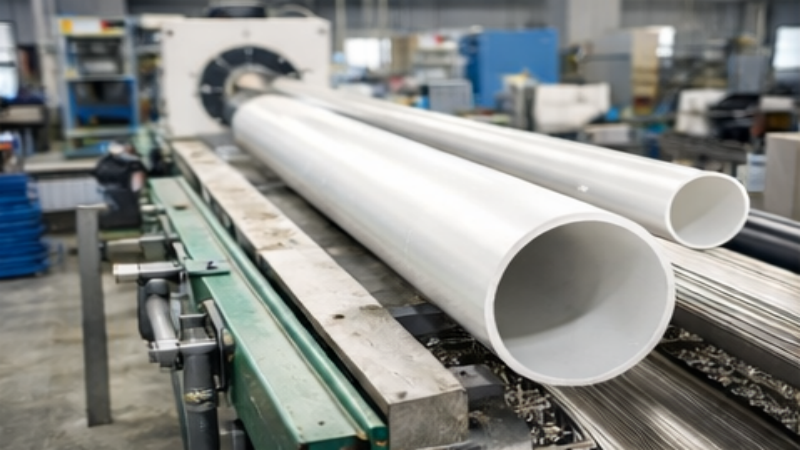
Crack pattern | What it often suggests | First clue homeowners may notice |
Long split along a horizontal run | Ongoing sagging, poor support, or bending stress | A slow drip, dampness, or white residue on the pipe |
Cracking at a hub, elbow, tee, or glued fitting | Concentrated stress at a connection point or weakness in the fitting area | Leakage around a joint rather than the middle of the pipe |
Damage near a wall, floor, or slab penetration | Friction, compression, or building movement around a concealed section | Staining, odor, or moisture showing up away from the visible pipe |
When an ABS pipe develops a long crack along its length, the problem is often structural rather than accidental. Horizontal sections carry weight continuously, and if they are not properly supported, the pipe can sag slightly over time. That repeated downward pull places stress on the same area every time water flows through it, eventually creating a split that follows the run of the pipe instead of breaking across it. In many cases, these cracks do not start as dramatic failures. They begin as tiny fissures that let out a slow, almost unnoticed seep, which is why homeowners may see staining or damp framing before they ever spot the crack itself. This pattern usually points to long-term fatigue, not a one-time impact.
Fittings are natural weak points because they concentrate stress in a smaller area. Elbows, tees, and hubs change direction, hold glued connections, and often absorb movement from multiple pipe sections at once. That makes them more vulnerable than a straight run of pipe. If an ABS pipe cracks at or near a glued joint, it often means the fitting has been under constant tension, or the surrounding pipe has been pulling against it for years. In older systems, the fitting area may also be where material weakness shows up first, because solvent-welded connections place both chemical and mechanical stress on the plastic. A crack here is especially telling: it usually suggests a localized failure point rather than random surface damage.
Some of the most troublesome ABS pipe cracks occur where the pipe disappears from view. When a pipe passes through framing, concrete, or a slab without enough isolation, small amounts of friction or pressure can build over time as the structure and plumbing move differently. That movement may not break the pipe immediately, but it can wear on the same contact point until a concealed crack forms. These failures often stay hidden much longer than exposed ones, which is why the first visible sign may be water staining on drywall, a persistent musty smell, or unexplained moisture near the floor. By the time the crack is discovered, the leak may have been active for far longer than expected.
● A slow “weeping” leak usually signals a crack that has been developing gradually rather than a sudden burst failure.
● If the visible damage appears away from the pipe itself, the actual crack may be buried behind a wall or at a penetration point.
Pipe condition | Repair may be reasonable | Replacement is usually the better call |
Short, isolated crack on an accessible straight section | Yes, if the surrounding ABS pipe is still sound and dry enough for a proper repair | No, unless the pipe is brittle or the crack is spreading |
Long split or crack that keeps growing | Rarely | Yes, because the failure is no longer localized |
Crack at a joint, hub, or fitting | Sometimes, but only if the nearby pipe is still stable | Often, because the stress is concentrated at the connection |
Older pipe with repeated leaks or signs of brittleness | Usually not the best long-term option | Yes, especially when one crack may signal weakness elsewhere in the run |
The size of the visible crack does not always reflect the real level of risk. A short split on a straight, exposed run may look minor, yet its location, the amount of leakage, and the condition of the surrounding pipe matter just as much as length. A drip from the middle of an otherwise solid section can be very different from a crack at a stressed joint or in older brittle pipe. Some cracks begin as slow leaks and grow over time, especially when the pipe is already under bending stress or fatigue. That means one visible crack can be the first sign of a larger weakness in the same run, not just a one-off defect.
Temporary repairs can help control dripping, but they should be treated as leak management, not a real cure. Wrap tape, clamps, patching compounds, or filler-style fixes may slow a leak, reduce damage to nearby materials, or keep a drain serviceable for a brief period, but they do not remove the root problem behind the crack. If the pipe split because of brittleness, poor support, or long-term installation stress, the damaged section is still compromised after the patch.
● Silicone-style wrap products can help contain an active drip for a short period.
● Crack-end relief or patching methods may slow crack growth, but they still do not restore the pipe to full structural reliability.
● Once a temporary fix works, the main risk is postponing the permanent repair for too long.
A cracked ABS pipe may be repairable when the damage is clearly limited to one accessible section and the surrounding material remains in good condition. Small cracks can sometimes be addressed with an appropriate repair method, and in other cases a damaged segment can be cut out and replaced while keeping the rest of the run in service. That only makes sense when the crack is truly localized. Access also matters. A repair that is practical on an exposed drain line may be much less reliable when the pipe is buried behind finishes or surrounded by other stress points. In other words, the crack itself is only half the decision; the condition of the pipe around it matters just as much.
Replacement becomes the smarter option when the pipe has a long split, repeated failures, or cracking near joints and fittings where stress is concentrated. Some older ABS systems were more vulnerable because of material weakness, which makes repeated patching a poor long-term strategy. In those cases, replacing only the visibly leaking spot may still leave the same aging or stressed conditions in place nearby. Once damage becomes extensive, cutting out the failed section or replacing more of the run is often more practical than trying multiple repair methods that may not last.
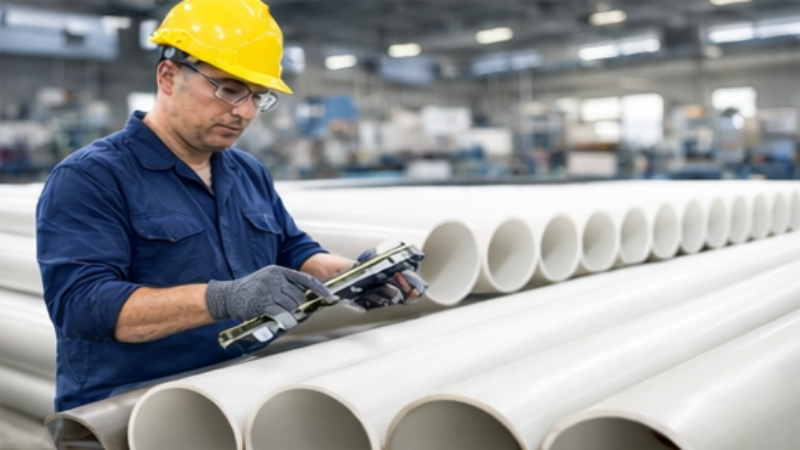
Preventive focus | Why it matters | What to pay attention to |
Support and alignment | Reduces long-term sagging and stress concentration | Horizontal runs, forced bends, and strained joints |
Heat and chemical control | Prevents softening, warping, and stress cracking | Boiling water, harsh solvents, and incompatible cleaners |
Routine inspection | Catches small failures before they become hidden leaks | Hairline cracks, residue, discoloration, and minor drips |
Preventing another crack starts with correcting the conditions that caused the first one. ABS pipe often fails after years of sagging, bending, or being held under constant tension, so proper support is not just a finishing detail—it is part of the repair itself. Horizontal runs should be adequately supported so the pipe does not flex under the weight of wastewater over time. Alignment matters just as much. If a replacement section is forced into place or tied into an existing run that is already pulling out of position, the new section may inherit the same stress that damaged the old one. A successful repair should leave the pipe stable, not merely watertight.
ABS pipe lasts longer when it is not exposed to unnecessary thermal or chemical abuse. Repeated flushing with boiling water may seem harmless in day-to-day maintenance, but over time it can soften the material and contribute to warping or microcracking. Harsh chemicals pose a different risk: certain solvents and cleaners can trigger stress cracking almost immediately if they are not intended for ABS. For long-term pipe life, safer habits matter more than aggressive quick fixes.
● Use a manual drain snake or other mechanical clearing method before resorting to extreme heat.
● Choose drain-care products that are compatible with plastic piping rather than harsh solvent-based cleaners.
● If ABS pipe is exposed outdoors, protect it from direct sunlight because UV exposure can make the material more brittle over time.
Routine inspection is one of the easiest ways to prevent a small defect from turning into a costly leak. Exposed ABS pipe should be checked periodically for hairline cracking, chalky or white residue, unusual discoloration, and slow drips that suggest a “weeping” failure rather than a sudden break. These early signs are easy to dismiss because the pipe may still function normally, but they often indicate that the material is already weakening. Spotting damage early gives you a chance to correct support, replace a vulnerable section, or address environmental stress before moisture reaches framing, flooring, or finished surfaces.
ABS pipe usually cracks because of age, stress, poor support, heat, or weak material. The crack matters, but the real cause matters more. Early inspection and the right repair choice can stop bigger leaks and costly damage. Hebei Anduan Technology Industry Co., Ltd. adds value with reliable ABS pipe solutions, durable performance, and practical support for safer long-term plumbing use.
A: ABS pipe usually cracks from aging, brittleness, poor support, thermal stress, or repeated mechanical strain.
A: ABS pipe can weaken under repeated near-boiling discharge, which may cause warping, softening, or later cracking.
A: ABS pipe may be repaired if damage is isolated, but replacement is safer for long splits, joint cracks, or brittle runs.


